iPhone
|
iPhone
Designed by Apple in California.
|
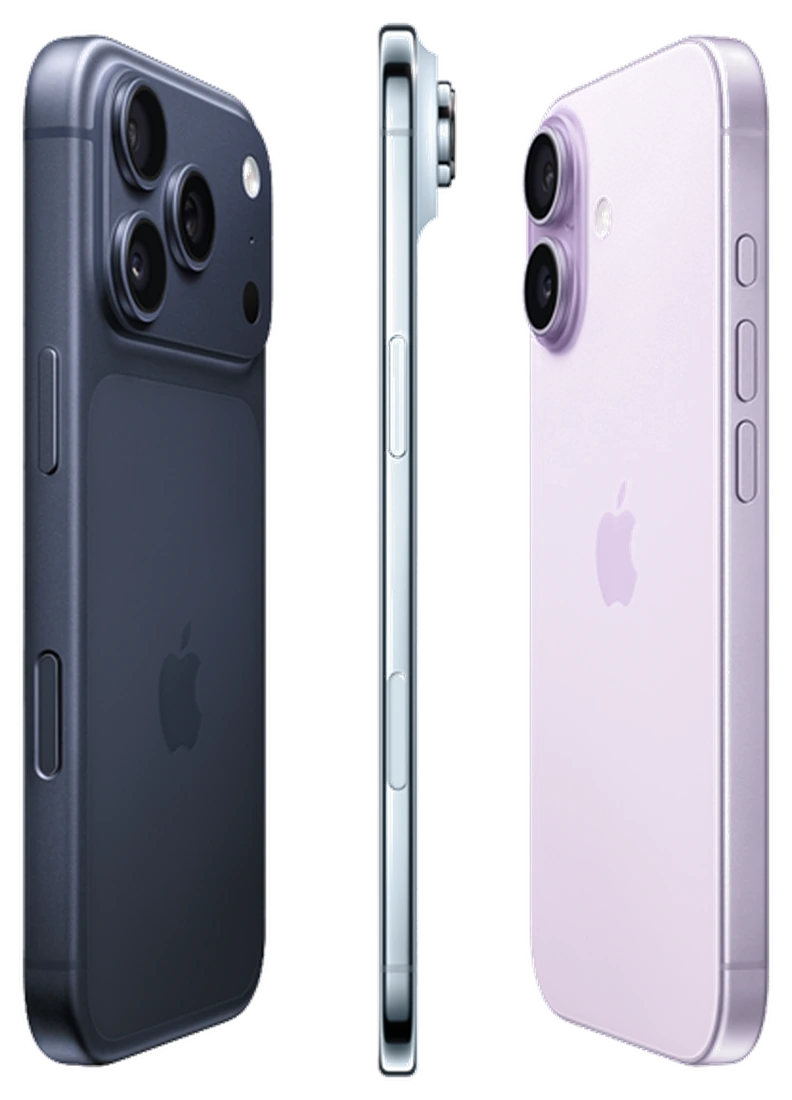
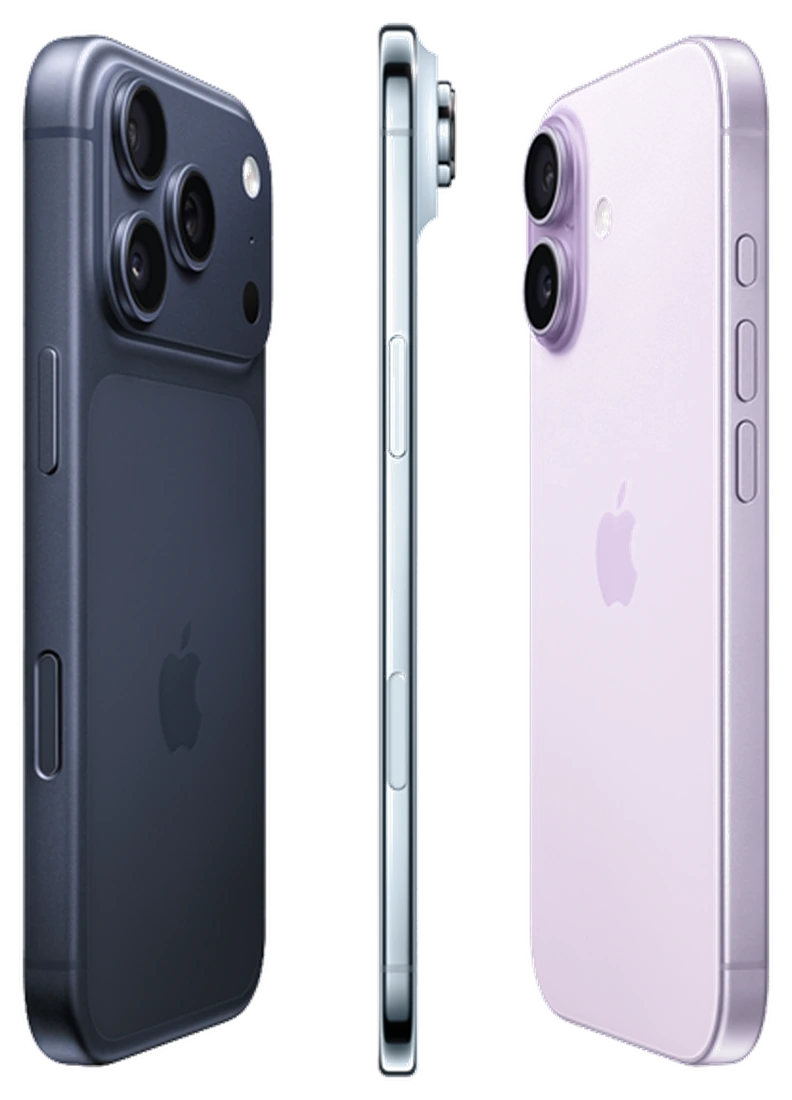
From left: iPhone 17 Pro, iPhone Air, iPhone 17
|
| Official iPhone site — Apple |
[ Show / Hide ]
| ||||||||||||||||||||||||||||||||||||||||||||



[ Show / Hide ]
| ||||||||||||||||||||||||||||||||||||||||||||||||

The iPhone is a line of smartphones designed and marketed by Apple since 2007. Unveiled by Steve Jobs as "an iPod, a phone, and an internet communicator" in one device, the original iPhone replaced the industry's keyboards and styluses with a multi-touch screen and, within a few years, made that design the definition of a phone. Nineteen generations later the line spans four current models — the iPhone 17, iPhone Air, iPhone 17 Pro, and iPhone 17 Pro Max, with the iPhone 17e as its entry point — and stands as one of the most commercially successful products ever made, with cumulative sales in the billions of units.
The iPhone runs iOS, Apple's mobile operating system, and its tight integration of in-house hardware and software became the company's defining method: Apple-designed processors from the iPhone 4's A4 onward, Apple GPUs, Neural Engines powering on-device machine learning and Apple Intelligence, and — in the current generation — Apple's own cellular modems and networking silicon. The App Store, introduced with the iPhone 3G, created the modern app economy; Apple Pay, Face ID, and satellite SOS each pushed adjacent industries to follow.
This page surveys the line's history era by era; each model's article covers its generation in depth.
1 History✎
1.1 2007–2010: Foundation✎
The original iPhone (2007) established the touchscreen slab; the iPhone 3G (2008) added 3G, GPS, and the App Store; the iPhone 3GS (2009) began the speed-year cadence; and the iPhone 4 (2010) delivered the first redesign — Retina display, the A4 chip, FaceTime, and antennagate. In four years the line went from curiosity to the industry's reference point.
1.2 2011–2014: Scale✎
The iPhone 4s (2011) introduced Siri and closed the Jobs era. The iPhone 5 (2012) stretched the screen to four inches and swapped the 30-pin connector for Lightning; the iPhone 5c and iPhone 5s (2013) split the lineup into tiers, the 5s adding Touch ID and the first 64-bit phone chip. The iPhone 6 and iPhone 6 Plus (2014) finally went big — and became the best-selling iPhone generation ever, introducing Apple Pay along the way.
1.3 2015–2018: Redefinition✎
The iPhone 6s and iPhone 6s Plus (2015) brought 3D Touch and Live Photos; the first iPhone SE (2016) began the budget line; the iPhone 7 and iPhone 7 Plus (2016) removed the headphone jack and added dual cameras and water resistance. In 2017 the lineup forked: the iPhone 8 and iPhone 8 Plus refined the classic design while the iPhone X deleted the Home button, introduced Face ID and OLED, and reset the product's interaction model. The iPhone XS, iPhone XS Max, and iPhone XR (2018) spread the new design across three tiers — the XR's value formula becoming the world's best-selling phone.
1.4 2019–2022: The Pro era✎
The iPhone 11, iPhone 11 Pro, and iPhone 11 Pro Max (2019) named the Pro tier and added Night mode and triple cameras. The iPhone 12 family (2020) — mini, 12, Pro, Pro Max — brought the flat redesign, OLED across the line, 5G, and MagSafe. The iPhone 13 generation (2021) fixed batteries and gave the Pros ProMotion (iPhone 13 mini · iPhone 13 Pro · iPhone 13 Pro Max); the iPhone 14 generation (2022) added satellite SOS and Crash Detection, replaced the mini with the iPhone 14 Plus, and gave the iPhone 14 Pro and iPhone 14 Pro Max the Dynamic Island and 48-megapixel camera.
1.5 2023–present: Titanium, AI, and Air✎
The iPhone 15 generation (2023) moved the line to USB-C, with titanium iPhone 15 Pro and iPhone 15 Pro Max models introducing the Action Button (iPhone 15 Plus completing the four). The iPhone 16 family (2024) — iPhone 16 Plus, iPhone 16 Pro, iPhone 16 Pro Max — was built around Apple Intelligence and the Camera Control key, joined in early 2025 by the iPhone 16e, which retired the SE line and debuted Apple's first modem. The 2025 generation replaced the Plus with the 5.64 mm iPhone Air and rebuilt the Pros around vapor-chamber aluminum unibodies (iPhone 17 · iPhone 17 Pro · iPhone 17 Pro Max); the iPhone 17e (2026) extended the annual entry tier. A folding model — the iPhone Duo — is widely expected to open the line's next chapter.
2 Product strategy✎
| Tier | Current model | Role |
|---|---|---|
| Pro Max | iPhone 17 Pro Max | Flagship: largest display, longest battery, full camera system |
| Pro | iPhone 17 Pro | Flagship capability at one-hand size |
| Air | iPhone Air | Design flagship: thinnest and lightest |
| Base | iPhone 17 | The volume iPhone |
| Prior generation | iPhone 16 · iPhone 16 Plus | Discounted continuation |
| Entry ("e") | iPhone 17e | Cheapest current iPhone, annual spring refresh |
The lineup's modern grammar solidified across the 2019–2024 generations: base models carry the volume with near-flagship cameras; Pro models hold the newest silicon, displays, and optics; the largest model anchors demand and price; and a value tier — XR-style number models, then the SE, now the e-series — guards the entrance. Since the iPhone 14, base models have run one silicon generation behind; since the iPhone 16, every model has met the Apple Intelligence hardware floor.
3 Hardware and software✎
The iPhone drove, and was driven by, Apple's silicon independence: from licensed cores to custom CPUs (iPhone 5's A6), the first 64-bit phone chip (iPhone 5s), Neural Engines (iPhone 8/iPhone X's A11), 3-nanometer processes (iPhone 15 Pro's A17 Pro), and finally Apple's own modems (iPhone 16e's C1) and networking chips (the N1 across the 17 generation). Signature hardware — multi-touch, Retina displays, Touch ID, Face ID, MagSafe, ProMotion, the Dynamic Island, satellite radios — repeatedly moved from novelty to industry baseline.
Every iPhone runs iOS, whose annual releases historically supported hardware for five to eight years; the iPhone 6s and iPhone SE received updates for a full decade. The platform's software eras — the App Store (2008), iCloud's PC-free devices (2011), iOS 7's redesign (2013), widgets and customization (2020), and Apple Intelligence with the Liquid Glass redesign of iOS 26 (2025) — track the product's own.
4 Impact✎
The iPhone is regularly ranked among the most influential consumer products of its century: it collapsed the camera, GPS unit, music player, and eventually wallet and car key into one object; its App Store built a multi-trillion-dollar software economy; and its design decisions — capacitive touch, app grids, notches, gesture navigation, the deleted headphone jack — became the industry's, usually within two product cycles. It remains Apple's largest business and the axis around which the company's services, wearables, and silicon strategies turn.