iPhone 6s
|
iPhone 6s
The only thing that's changed is everything.
| |||
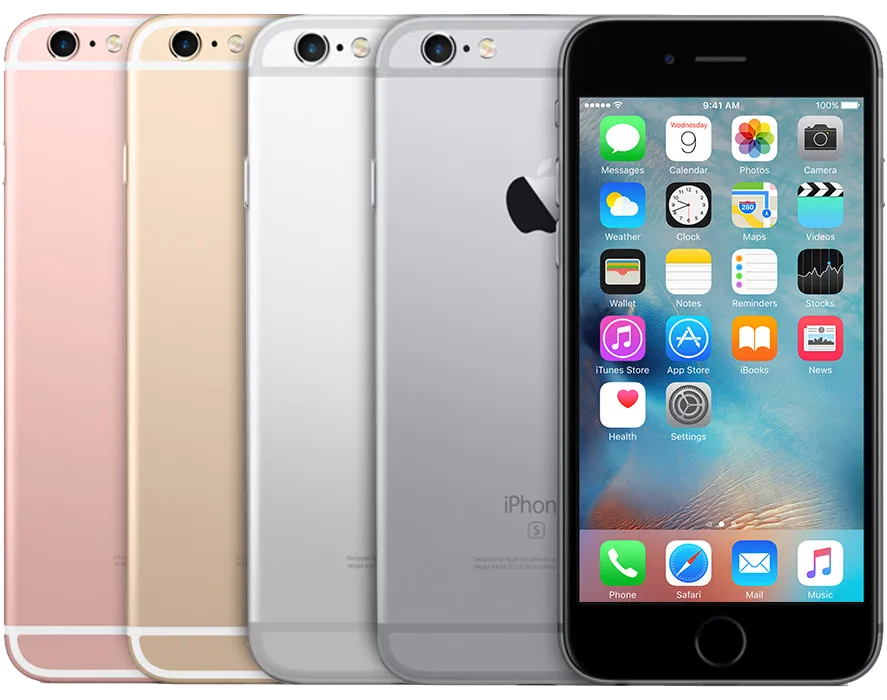
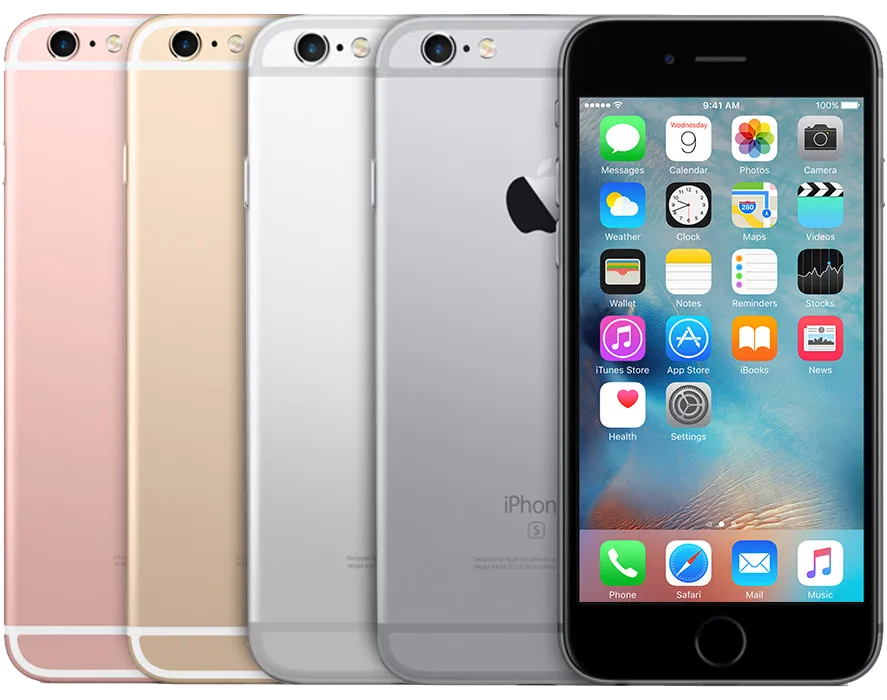
| Rose Gold | Gold | Silver | Space Gray |
| iPhone 6s — Technical Specifications (Apple Support) | |||
[ Show / Hide ]
| ||||||||||||||||||||||||||||||||||||||||||||||||

The iPhone 6s is a smartphone designed and marketed by Apple, announced on September 9, 2015, and released on September 25, 2015, alongside the iPhone 6s Plus. Its slogan — "The only thing that's changed is everything." — was a preemptive answer to the S-year question: the body was the iPhone 6's, but nearly every component inside had been replaced.
The headline addition was 3D Touch, a pressure-sensitive display layer that turned a firm press into a new input dimension, backed by a redesigned Taptic Engine. The camera jumped to 12 megapixels and 4K video, the front camera to 5 megapixels with a display-flash trick, and the A9 chip with 2 GB of RAM roughly doubled the phone's working memory. Live Photos — stills that capture a breath of motion — debuted here, as did the Rose Gold finish.
Less visibly, the 6s answered its predecessor's structural embarrassment: the chassis moved to stronger 7000-series aluminum, ending bendgate. The 6s sold 13 million units with the 6s Plus in the opening weekend — a record — and became one of the longest-supported iPhones ever, receiving updates from iOS 9 through iOS 15.
1 Design✎
Dimensionally the 6s is the iPhone 6 to the tenth of a millimeter, but 14 grams heavier at 143 g: the price of the 7000-series aluminum alloy — the aerospace-grade material Apple developed for the Apple Watch Sport — and the 3D Touch display stack. Bend-test videos that had humiliated the 6 Plus found the new chassis dramatically stiffer. A tiny "S" on the back was, once again, the only visible tell.
Rose Gold joined Space Gray, Silver, and Gold, and promptly dominated launch-weekend orders; the pink aluminum finish became the generation's status signal the way white earbuds once were.
2 3D Touch✎
3D Touch layered capacitive pressure sensing under the Retina display: a light press "peeked" at content — an email, a link, a photo — and a deeper press "popped" it open, while home-screen icons sprouted quick-action menus. The rebuilt Taptic Engine answered each press with crisp haptic ticks. Reviewers ranged from "the next right-click" to "a solution in search of a problem," and the feature ultimately proved the latter: adoption by developers stayed shallow, and Apple quietly retired the hardware a few generations later in favor of long-press. As engineering, though, it remains the most ambitious display Apple had shipped to that point.
3 Hardware✎
| Developer | Apple |
|---|---|
| Generation | 9th |
| Announced | September 9, 2015 |
| Released | September 25, 2015 |
| Discontinued | September 12, 2018 |
| Predecessor | iPhone 6 |
| Related | iPhone 6s Plus |
| Successor | iPhone 7 |
| Display | 4.7-inch Retina HD IPS LCD 1334 × 750 (326 ppi) · 3D Touch |
| Chip | Apple A9 (dual-core Twister, 1.85 GHz) + embedded M9 coprocessor |
| RAM | 2 GB |
| Storage | 16 GB · 64 GB · 128 GB (32 GB replacing 16/64 from 2016) |
| Rear camera | 12 MP, f/2.2 · Live Photos 4K video · 240 fps slo-mo (720p) |
| Front camera | 5 MP with Retina Flash |
| Battery | 1,715 mAh built-in |
| Connectivity | LTE Advanced (Cat. 6, 300 Mbps) Wi-Fi 802.11ac + MIMO · Bluetooth 4.2 NFC (Apple Pay) |
| Colors | Rose Gold · Gold · Silver · Space Gray |
| Launch price | $649 (16 GB) · $749 (64 GB) · $849 (128 GB) (U.S., unsubsidized) |
| OS | iOS 9.0 ~ 15.8.4 |
The A9's two Twister cores at 1.85 GHz delivered a claimed 70% CPU and 90% GPU jump over the A8, and the doubling of RAM to 2 GB ended years of aggressive Safari-tab reloading. The M9 motion coprocessor moved onto the A9 die itself, enabling always-listening "Hey Siri" without the phone being plugged in. Touch ID's second-generation sensor unlocked so fast users complained they could no longer read their lock screens.
The A9 also generated the era's nerdiest controversy: "chipgate." Apple dual-sourced the chip from TSMC (16 nm) and Samsung (14 nm), and early benchmarks suggested the Samsung variant drew more power. Apple's own data put real-world battery difference at 2–3%, and the story faded — but not before checking one's chip foundry became a brief consumer ritual.
A separate, real defect followed: some 6s units built in late 2015 contained a battery component exposed to ambient air during assembly, causing unexpected shutdowns; Apple ran a free battery-replacement program for the affected serial range.
4 Camera✎
The 12-megapixel iSight sensor ended three generations at 8 MP, adding 4K video recording, 63-megapixel panoramas, and — via deep trench isolation between the smaller 1.22µ pixels — color accuracy that kept pace with the resolution jump. Live Photos captured 1.5 seconds of motion and sound around every still, playable with a 3D Touch press; the format spread across the ecosystem and endures. The front camera finally grew up: 5 megapixels, with the display flaring as a "Retina Flash" for selfies in the dark.
5 Software✎
The 6s shipped with iOS 9, whose Proactive suggestions, Notes overhaul, and San Francisco system font (the same SF family this wiki's iPhone infoboxes reference) refined rather than reinvented. The phone's support run became historic: iOS 10, 11, 12, 13, 14, and 15 all installed on 2015 hardware, with the final security update, iOS 15.8.4, arriving in 2025 — a full decade of platform life.
6 Release and reception✎
Thirteen million launch-weekend units (with the 6s Plus) set a record the line would not beat for years, aided by the first iPhone Upgrade Program — Apple's own monthly-payment, new-phone-every-year plan — and China joining the launch wave. Reviews called the 6s the strongest S-model yet: the camera, speed, and Touch ID drew praise; 3D Touch fascinated but did not convince; and the 16 GB base configuration, kept for a third year while 4K video filled it in minutes, was the unanimous complaint.
The 6s outlived its own successor's launch by two years, remaining on sale until September 12, 2018 — and in some markets via carriers even later — as Apple's budget anchor.
7 Legacy✎
The 6s closed out bendgate with metallurgy, opened the 4K and Live Photos eras, and delivered "Hey Siri" as an always-on ambient assistant — the phone that made the iPhone listen. Its decade of updates set the software-longevity high-water mark that the line still measures itself against, through the current iPhone 17 generation. And 3D Touch stands as the era's great cautionary tale: brilliant hardware that software never learned to need.