Loading history…
iPhone SE
This is r1 (the current revision), saved by jack. Full history
|
iPhone SE
A big step for small.
| |||
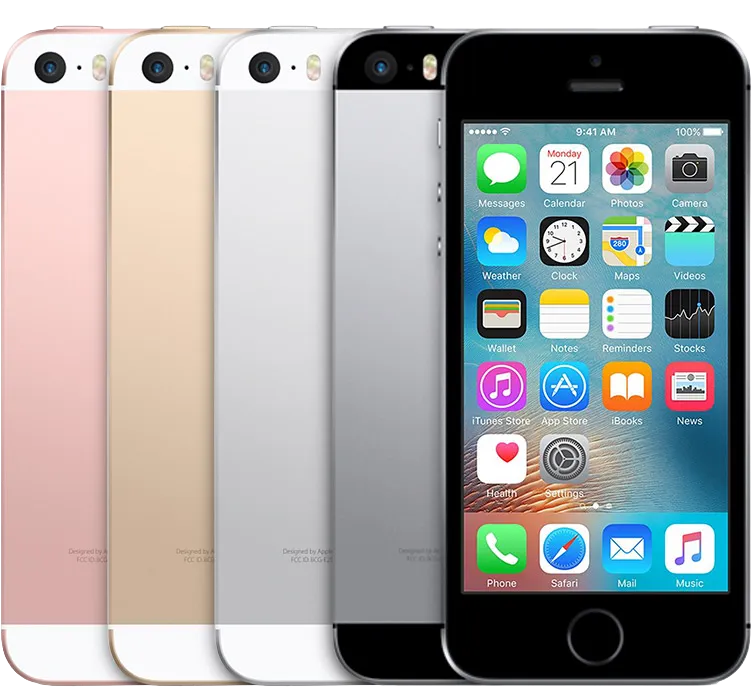
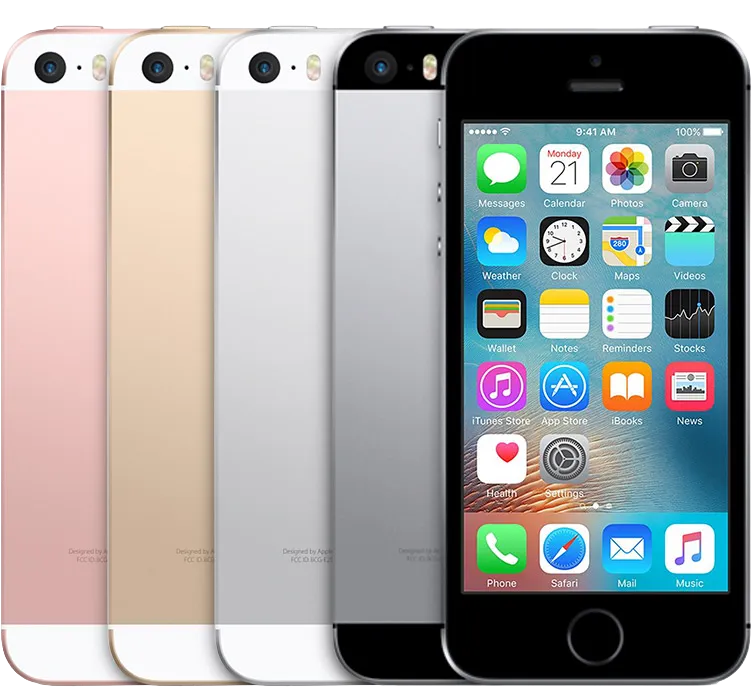
| Rose Gold | Gold | Silver | Space Gray |
| iPhone SE (1st generation) — Technical Specifications (Apple Support) | |||
[ Show / Hide ]
| ||||||||||||||||||||||||||||||||||||||||||||||||

The iPhone SE ("Special Edition") is a line of budget smartphones designed and marketed by Apple across three generations — 2016, 2020, and 2022 — each built on the same formula: current-generation silicon inside the previous era's proven body, at the lowest price in the lineup. This page covers all three generations.
The first SE, announced March 21, 2016, and released March 31, packed the iPhone 6s's A9 chip and 12-megapixel camera into the iPhone 5s's beloved 4-inch aluminum frame at $399 — the cheapest new iPhone ever sold to that point. The second (April 2020) applied the recipe to the iPhone 8 body with the A13; the third (March 2022) kept that body and added the A15 and 5G. The line answered a persistent, vocal minority — buyers who wanted small phones, Touch ID, or simply a lower price — and each generation punched far above its price in performance, because the chip was never where Apple cut the corner.
The SE line ended in February 2025, when the iPhone 16e replaced it as Apple's entry model, closing a nine-year run as the lineup's value anchor.
1 First generation (2016)✎
The original SE revived the iPhone 5s's 4-inch chamfered aluminum design — indistinguishable apart from matte-chamfered edges and an SE badge — in the 6s generation's four finishes, including Rose Gold. Inside, it was two-thirds an iPhone 6s: the A9 with 2 GB of RAM, 12-megapixel camera with 4K video and Live Photos, and "Hey Siri" support, omitting 3D Touch, the barometer, and the newer front camera (it kept the 1.2 MP unit) and first-generation Touch ID sensor.
| Announced | March 21, 2016 |
|---|---|
| Released | March 31, 2016 |
| Discontinued | September 12, 2018 |
| Body | iPhone 5s design · 4-inch display 1136 × 640 (326 ppi) |
| Chip | Apple A9 · 2 GB RAM |
| Storage | 16 GB · 64 GB (32/128 GB from 2017) |
| Cameras | 12 MP rear, 4K video · 1.2 MP front |
| Battery | 1,624 mAh |
| Colors | Rose Gold · Gold · Silver · Space Gray |
| Launch price | $399 (16 GB) · $499 (64 GB) |
| OS | iOS 9.3 ~ 15.8.4 |
Reviewers embraced it as the small phone done right — flagship speed, better battery life than the 6s (the 4-inch display asked less of the same chip), and a design many still preferred. Weaknesses were inherited: the old front camera, first-generation Touch ID, and a 16 GB base tier. It sold beyond Apple's forecasts, with supply constrained for months, and remained on sale until September 2018.
2 Second generation (2020)✎
The second SE, announced April 15, 2020, and released April 24, moved the formula to the iPhone 8's 4.7-inch glass-and-aluminum body: Touch ID home button, single 12-megapixel camera, Qi wireless charging, IP67 — now powered by the iPhone 11 generation's A13 Bionic with 3 GB of RAM, at the same $399. Portrait mode arrived via machine learning on the single lens, and the chip supported every current iOS feature.
| Announced | April 15, 2020 |
|---|---|
| Released | April 24, 2020 |
| Discontinued | March 8, 2022 |
| Body | iPhone 8 design · 4.7-inch display 1334 × 750 (326 ppi) · True Tone |
| Chip | Apple A13 Bionic · 3 GB RAM |
| Storage | 64 GB · 128 GB · 256 GB |
| Cameras | 12 MP rear, 4K 60 · 7 MP front Portrait mode (software) |
| Battery | 1,821 mAh · Qi wireless charging |
| Colors | Black · White · (PRODUCT)RED |
| Launch price | $399 (64 GB) · $449 (128 GB) · $549 (256 GB) |
| OS | iOS 13.4 ~ current |
Launched into pandemic lockdowns, it became the value benchmark of 2020 — "the best $400 phone ever made" was a recurring review verdict — criticized only for its dated bezels and battery life. It remains supported by current iOS releases.
3 Third generation (2022)✎
The third SE, announced March 8, 2022, and released March 18, kept the 8-derived body and added the iPhone 13's A15 Bionic, 5G, a larger battery, and the tougher glass of the 13 generation, at a slightly raised $429. Colors shifted to Midnight, Starlight, and (PRODUCT)RED.
| Announced | March 8, 2022 |
|---|---|
| Released | March 18, 2022 |
| Discontinued | February 19, 2025 |
| Body | iPhone 8 design · 4.7-inch display 1334 × 750 (326 ppi) · True Tone |
| Chip | Apple A15 Bionic · 4 GB RAM · 5G |
| Storage | 64 GB · 128 GB · 256 GB |
| Cameras | 12 MP rear, Smart HDR 4, Deep Fusion 7 MP front |
| Battery | 2,018 mAh · Qi wireless charging |
| Colors | Midnight · Starlight · (PRODUCT)RED |
| Launch price | $429 (64 GB) · $479 (128 GB) · $579 (256 GB) |
| OS | iOS 15.4 ~ current |
By 2022 the formula's charm had thinned: reviewers noted the 2017-era design, small display, and large bezels against a market of $400 all-screen rivals, while conceding the A15 made it the fastest phone anywhere near its price. It sold steadily to its constituencies — first-phone buyers, enterprise fleets, Touch ID loyalists — until February 19, 2025, when the iPhone 16e succeeded the SE line outright.
4 Legacy✎
The SE proved a counterintuitive strategy three times over: Apple's cheapest phone could carry its newest chip, because chassis and display — not silicon — were where scale made reuse nearly free. The line kept Touch ID, the home button, the headphone jack (first generation), and the small form factor alive years after the flagships moved on, and its decade-class software support made it the rational budget buy of three separate eras. Its successor iPhone 16e and the current iPhone 17e continue the affordable-tier role — though both abandoned the SE's defining trait of resurrecting a classic body.
Content available under CC BY-SA 4.0