Loading history…
iPhone 12 Pro Max
This is r1 (the current revision), saved by jack. Full history
|
iPhone 12 Pro Max
It's a leap year.
| |||
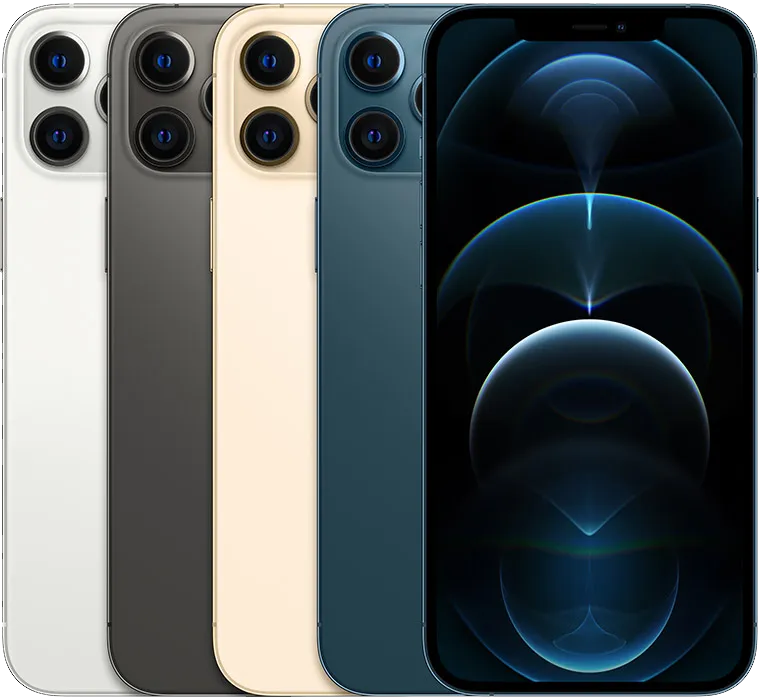
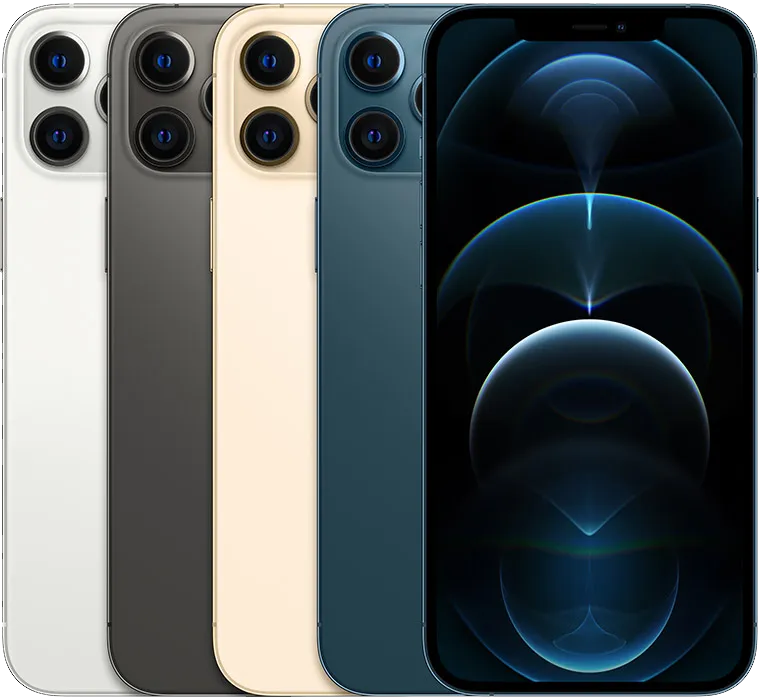
| Silver | Graphite | Gold | Pacific Blue |
| iPhone 12 Pro Max — Technical Specifications (Apple Support) | |||
[ Show / Hide ]
| ||||||||||||||||||||||||||||||||||||||||||||||||

The iPhone 12 Pro Max is a smartphone designed and marketed by Apple, announced on October 13, 2020, and released on November 13, 2020, as the largest and most capable of the four-model iPhone 12 generation. Its 6.7-inch Super Retina XDR display was the biggest ever fitted to an iPhone, and — breaking the two-year policy of camera parity between Pro sizes — it carried exclusive photographic hardware: a 47% larger main sensor with 1.7µ pixels, sensor-shift stabilization (moving the sensor itself rather than the lens, a first in any phone), and a longer 65 mm telephoto reaching 2.5× optical.
The size-exclusive camera made the Max, for the first time, not just the biggest but flatly the best iPhone — a distinction reviewers debated (was the low-light edge worth the 228-gram slab?) and buyers settled by making it the generation's premium volume leader. It served one year before the iPhone 13 Pro generation restored camera parity between sizes.
1 Design✎
The Pro Max stretches the generation's flat stainless-and-frosted-glass Pro design to 160.8 × 78.1 × 7.4 mm — thinner but wider and taller than the iPhone 11 Pro Max, and at 228 g the heaviest iPhone yet. The flat sides that charmed on smaller models divided opinion at this scale, digging into palms during long one-handed holds. Silver, Graphite, Gold, and Pacific Blue; Ceramic Shield; IP68 at six meters; MagSafe at 15 W.
2 Hardware✎
| Developer | Apple |
|---|---|
| Generation | 14th |
| Announced | October 13, 2020 |
| Released | November 13, 2020 |
| Discontinued | September 14, 2021 |
| Predecessor | iPhone 11 Pro Max |
| Related | iPhone 12 Pro · iPhone 12 · iPhone 12 mini |
| Successor | iPhone 13 Pro Max |
| Display | 6.7-inch Super Retina XDR OLED 2778 × 1284 (458 ppi) 1,200 nits HDR · Ceramic Shield |
| Chip | Apple A14 Bionic (5 nm · 16-core Neural Engine) |
| RAM | 6 GB |
| Storage | 128 GB · 256 GB · 512 GB |
| Rear cameras | 12 MP ultra-wide, f/2.4 + 12 MP wide, f/1.6, sensor-shift OIS (1.7µ pixels, 47% larger sensor) + 12 MP telephoto, f/2.2 (2.5×) + LiDAR · ProRAW · Dolby Vision 60 fps |
| Front camera | 12 MP TrueDepth · Night mode |
| Battery | 3,687 mAh · MagSafe 15 W · Qi |
| Connectivity | 5G (sub-6; + mmWave in US) Wi-Fi 6 · Bluetooth 5.0 |
| Colors | Silver · Graphite · Gold · Pacific Blue |
| Launch price | $1,099 (128 GB) · $1,199 (256 GB) · $1,399 (512 GB) |
| OS | iOS 14.1 ~ current |
Beyond the camera exclusives the Max matched the iPhone 12 Pro — A14, 6 GB of RAM, LiDAR, the 5G stack — with its 3,687 mAh cell again the endurance leader of the generation, if slightly down on the 11 Pro Max's record thanks to 5G's appetite.
3 Camera✎
The Max's main sensor gathered 87% more light than the 11 Pro Max's — big pixels plus f/1.6 — and its sensor-shift stabilization, making five thousand micro-adjustments per second, held handheld Night mode exposures other phones needed tripods for. Low-light comparisons put it clearly ahead of the 12 Pro and every rival of its cycle; the 65 mm telephoto traded a stop of speed for reach. Camera reviewers called it the best low-light phone camera made to that point, and working photographers — Apple courted them with ProRAW launching in the same iOS 14.3 window — treated it as the first phone camera that credibly substituted for a compact.
Sensor-shift stabilization spread to the entire iPhone 13 lineup the following year — the Max's exclusive becoming the platform baseline in twelve months.
4 Software✎
Shipped with iOS 14.1; ProRAW in 14.3; current release train since.
5 Release and reception✎
Released in the delayed second wave with the iPhone 12 mini — the generation's two extremes shipping together — the Pro Max led premium-tier sales through the holiday "supercycle" quarter, Apple's biggest iPhone quarter ever to that point. Reviews split on ergonomics and united on output: too big for many hands, and the best camera and battery in any phone. Discontinued September 14, 2021.
6 Legacy✎
The 12 Pro Max re-established hardware hierarchy inside the Pro tier — the biggest phone carrying physically better optics — and every sensor it debuted became standard: sensor-shift OIS lineup-wide in one year, the big-sensor arms race industry-wide in two. It fixed the Max tier's identity as the no-compromise camera flagship, the role the current iPhone 17 Pro Max still occupies.
Content available under CC BY-SA 4.0