Loading history…
iPhone 8
This is r1 (the current revision), saved by jack. Full history
|
iPhone 8
A new generation of iPhone.
| ||
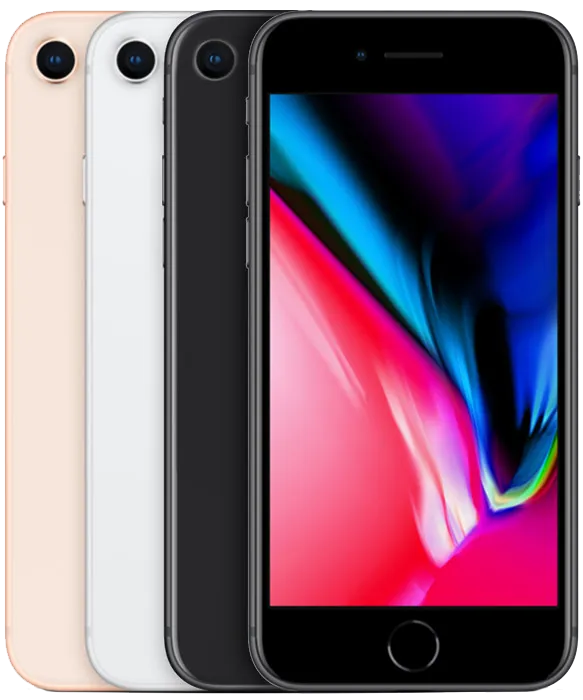
| Gold | Silver | Space Gray |
| iPhone 8 — Technical Specifications (Apple Support) | ||
[ Show / Hide ]
| ||||||||||||||||||||||||||||||||||||||||||||||||

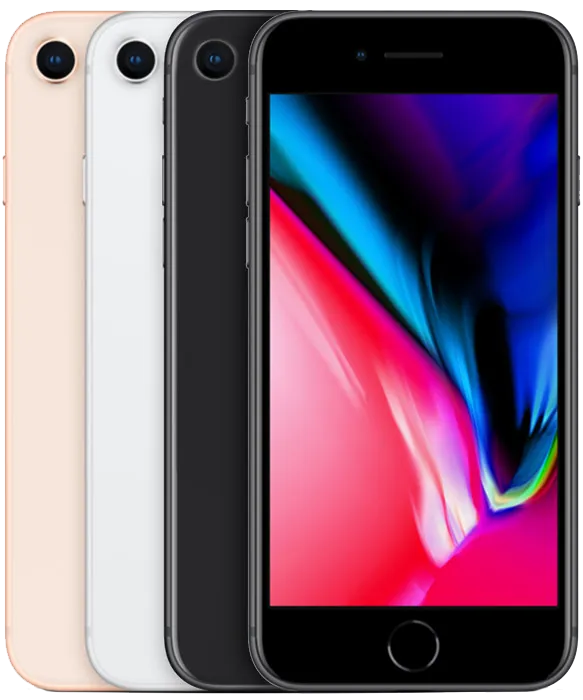
The iPhone 8 is a smartphone designed and marketed by Apple, announced on September 12, 2017 — the first event held in the Steve Jobs Theater at Apple Park — and released on September 22, 2017, alongside the iPhone 8 Plus. It had the strangest debut circumstance of any iPhone: introduced an hour before the iPhone X, the radical all-screen flagship that instantly recast the 8 as the conservative choice at its own launch.
Taken on its merits, the 8 was a substantial fourth pass at the iPhone 6 silhouette: a glass back returned for the first time since the iPhone 4s, enabling Qi wireless charging; the A11 Bionic brought six cores and Apple's first fully custom GPU; the display gained True Tone ambient color adaptation; and the camera sensor was new despite the familiar 12-megapixel count. Storage doubled to a 64 GB base.
The 8 pair launched with iOS 11, sold steadily in the X's shadow — then outsold it in units through parts of 2018, vindicating the two-track strategy — and lived on until April 2020, when the second-generation iPhone SE inherited its body almost unchanged.
1 Design✎
The 8 wraps the familiar 4.7-inch aluminum frame front and back in "the most durable glass ever in a smartphone," color-matched via a new seven-layer ink process and reinforced by a steel-and-copper internal structure. The glass enabled the generation's marquee convenience — Qi wireless charging on the open industry standard, compatible with existing mats in cafés and cars — at the cost of a second breakable face and a modest weight gain to 148 g.
Finishes consolidated to Gold (a warmer, pinkish tone absorbing Rose Gold), Silver, and Space Gray, with (PRODUCT)RED — white front on the 7, black front here — arriving April 2018. IP67, stereo speakers (25% louder), the solid-state Home button, and the absent headphone jack all carried over.
2 Hardware✎
| Developer | Apple |
|---|---|
| Generation | 11th |
| Announced | September 12, 2017 |
| Released | September 22, 2017 |
| Discontinued | April 15, 2020 |
| Predecessor | iPhone 7 |
| Related | iPhone 8 Plus · iPhone X |
| Successor | iPhone XR (body: iPhone SE 2nd gen) |
| Display | 4.7-inch Retina HD IPS LCD 1334 × 750 (326 ppi) · 3D Touch True Tone · wide color (P3) |
| Chip | Apple A11 Bionic (2 + 4 cores · first Apple GPU · Neural Engine) |
| RAM | 2 GB |
| Storage | 64 GB · 256 GB |
| Rear camera | 12 MP, f/1.8 · OIS 4K 60 fps · 240 fps slo-mo (1080p) |
| Front camera | 7 MP, 1080p |
| Battery | 1,821 mAh · Qi wireless charging fast charge (50% in 30 min) |
| Durability | IP67 · glass front and back |
| Colors | Gold · Silver · Space Gray (+ (PRODUCT)RED from April 2018) |
| Launch price | $699 (64 GB) · $849 (256 GB) |
| OS | iOS 11.0 ~ 16.7.10 |
The A11 Bionic was the star: two Monsoon performance cores plus four efficiency cores — all usable simultaneously for the first time — Apple's first in-house GPU after dropping Imagination Technologies, and the first Neural Engine, a dedicated block for machine-learning inference that at launch served Face ID and Animoji on the X but soon underpinned computational photography platform-wide. The 8 benchmarked ahead of every Android flagship of its year by wide margins, and ahead of some laptop-class chips.
Wireless charging arrived via the open Qi standard rather than a Beats-style proprietary scheme — an uncharacteristic and warmly received choice — with 7.5 W support enabled that winter, and wired fast charging reached 50% in thirty minutes via USB-C PD (with adapter sold separately, reviewers noted pointedly).
3 Camera✎
The 12-megapixel sensor was new — larger, faster, deeper pixels — with OIS and an f/1.8 lens carried from the 7, Slow Sync flash for more natural low-light flash shots, and video stepping up to 4K at 60 fps and 1080p slow motion at 240 fps, both firsts enabled by Apple's new custom ISP. Reviewers measured a modest but real photo improvement and a major video one; the single-lens 8 conceded Portrait features to the iPhone 8 Plus and X.
4 Software✎
The 8 shipped with iOS 11 — Control Center redesign, ARKit's augmented-reality debut (leaning on the A11's horsepower), and the Files app — and rode the update train through iOS 16, ending at 16.7.10 in 2024, seven major versions. Its body outlived even that: the second-generation iPhone SE of 2020 reused the 8's chassis so closely that most cases fit both.
5 Release and reception✎
The 8 launched into visibly muted lines — pre-orders skewed heavily toward the X, still six weeks away — and early sales reporting framed it as overshadowed. The framing inverted within months: the 8 and 8 Plus outsold the X in several quarters on price pragmatism, and reviews had already called the 8 what it was — the most refined version of the classic iPhone, with the year's fastest chip, recommended precisely for buyers unready for the X's $999 gamble and Face ID relearning. Criticisms: the fourth-year design, 2 GB of RAM, bezels that suddenly looked enormous beside the X, and the separately sold fast-charge adapter.
It was discontinued on April 15, 2020, succeeded in place by the SE that wore its body.
6 Legacy✎
The 8 closed the Home-button flagship era with its best iteration — then extended that era by proxy, as the iPhone SE second and third generations carried its chassis to 2025. Qi charging standardized wireless power across the industry, and the A11's Neural Engine introduced the on-device AI block that grew into the foundation of Apple Intelligence on the current iPhone 17 generation. History's verdict on its odd launch: being the sensible iPhone beside a revolutionary one turned out to be a very good business.
Content available under CC BY-SA 4.0