Loading history…
Apple Vision Pro
This is r1 (the current revision), saved by jack. Full history
|
Apple Vision Pro
Welcome to the era of spatial computing.
|
 i i
|
| Official Apple Vision Pro site — Apple |
[ Show / Hide ]
| ||||||||||||||||||||||||||||||||||||||||||||





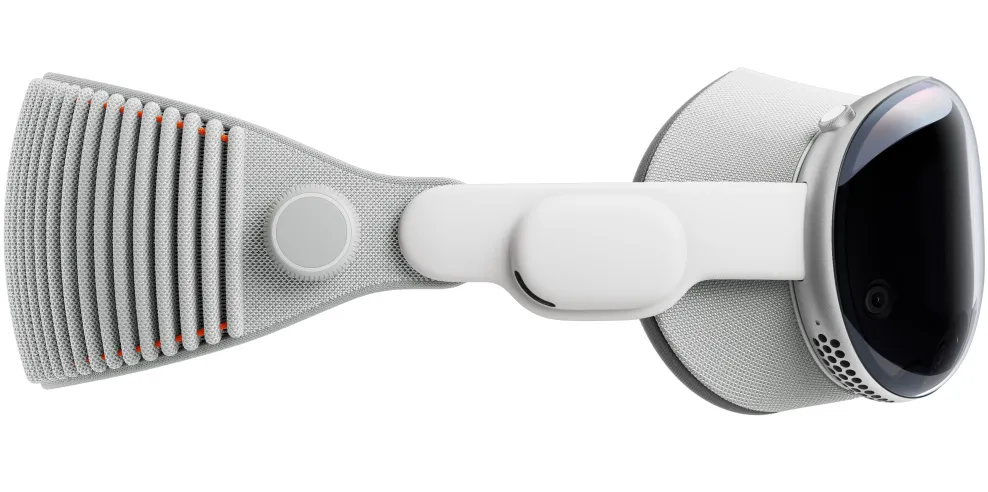
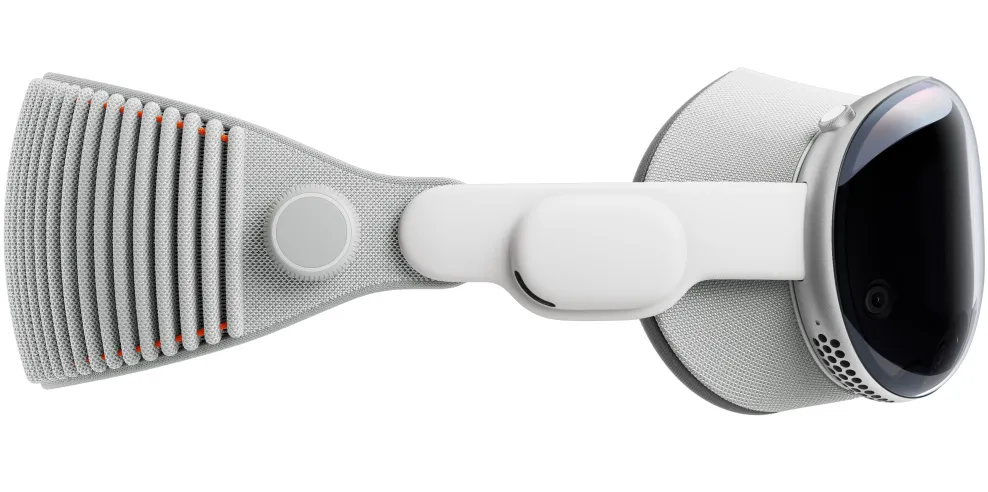
Apple Vision Pro is Apple's spatial computer — a headset that places visionOS apps as windows in the wearer's real room, controlled by eyes and hands alone. Launched in February 2024 at $3,499, it is the company's first new platform since the Apple Watch and its most technically extravagant product: 23 million pixels of micro-OLED, a dual-chip brain, and passthrough video fast enough to trust your morning coffee to.
Two processors share the work: an M-series chip runs visionOS and apps while the dedicated Apple R1 fuses twelve cameras, five sensors, and six microphones into fresh images within twelve milliseconds — the real-time guarantee that makes wearing a computer on your face physically tolerable.
1 History✎
Unveiled at WWDC 2023 as "one more thing," Vision Pro shipped February 2, 2024 in the United States with the Apple M2 and R1, rolling out internationally through the year. Reviews split on one axis: the best headset display and passthrough ever shipped, against weight, price, and an app library still finding its purpose. Personas, 3D movies, panoramic Mac Virtual Display, and spatial video — shot on iPhone — carried the early story.
The October 2025 refresh swapped in the Apple M5, boosting rendering and enabling more of Apple Intelligence on-device, and replaced the loathed single strap with the Dual Knit Band. visionOS 26 added spatial widgets, more lifelike Personas, and PlayStation VR2 controller support — the platform maturing faster than the hardware slims.
2 Current lineup✎
| Model | Chips | Role |
|---|---|---|
| Apple Vision Pro | M5 + R1 (2025) | Spatial computer — $3,499 |
3 Position✎
Vision Pro is Apple playing the long game in public: a first-generation platform priced for developers and enthusiasts while the company miniaturizes toward eventual glasses. Its lasting contributions are already visible — the eye-and-pinch interaction model, spatial video across the ecosystem, and visionOS as the template for whatever comes next.
Content available under CC BY-SA 4.0