Black Desert Online


|
Black Desert Online
검은사막
| |
 i i
| |
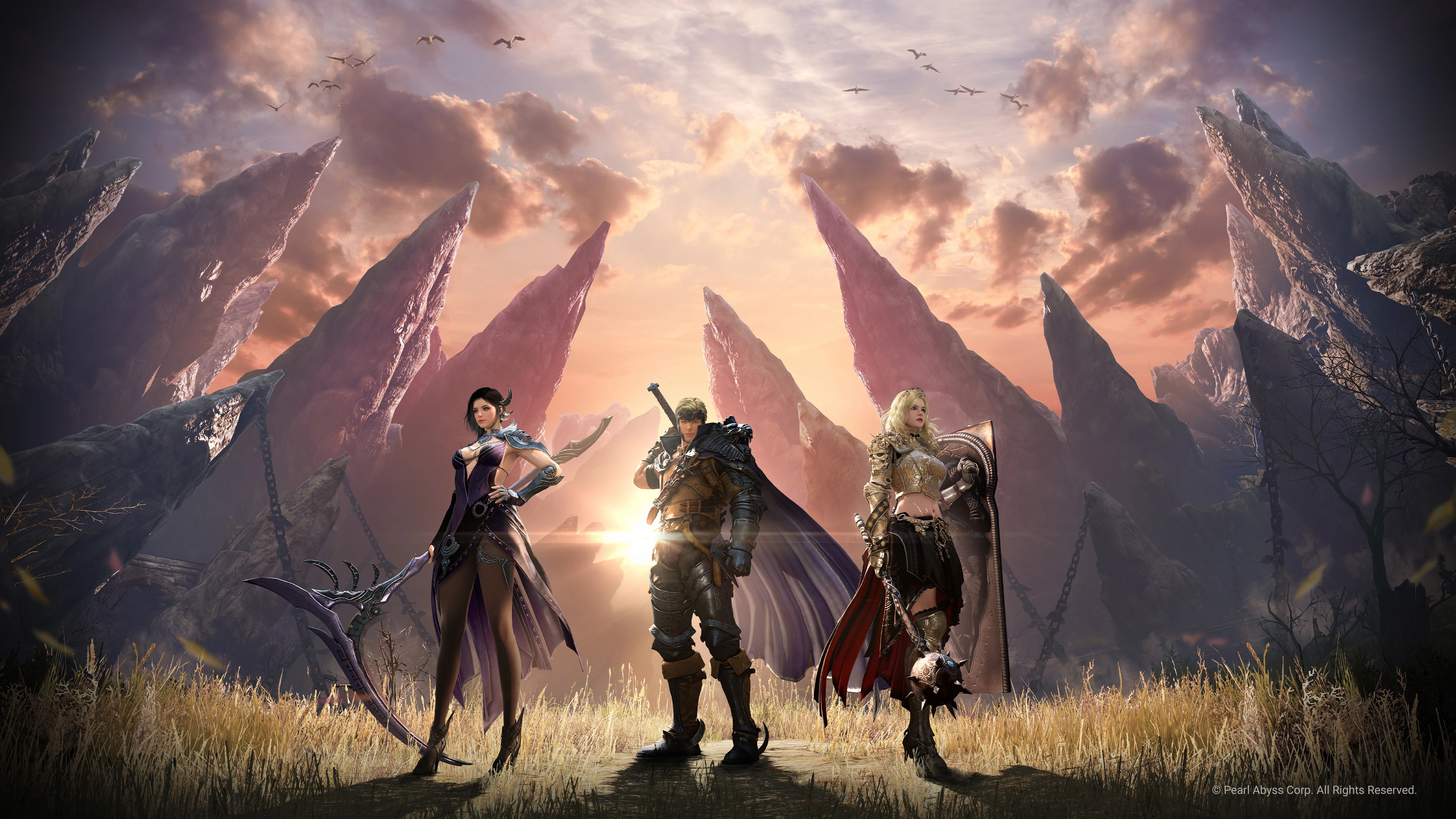
Adventurers of three classes in the world of Black Desert Official key art, Pearl Abyss
| |
| Developer | Pearl Abyss |
|---|---|
| Publisher | |
| Director | Kim Dae-il |
| Engine | In-house Pearl Abyss engine |
| Genre | Sandbox MMORPG
|
| Platforms | Windows, PlayStation 4, PlayStation 5, Xbox One, Xbox Series X/S |
| Korean release | July 14, 2015 |
| Western release | March 3, 2016 |
| Classes | 32 |
| Mode | Multiplayer |



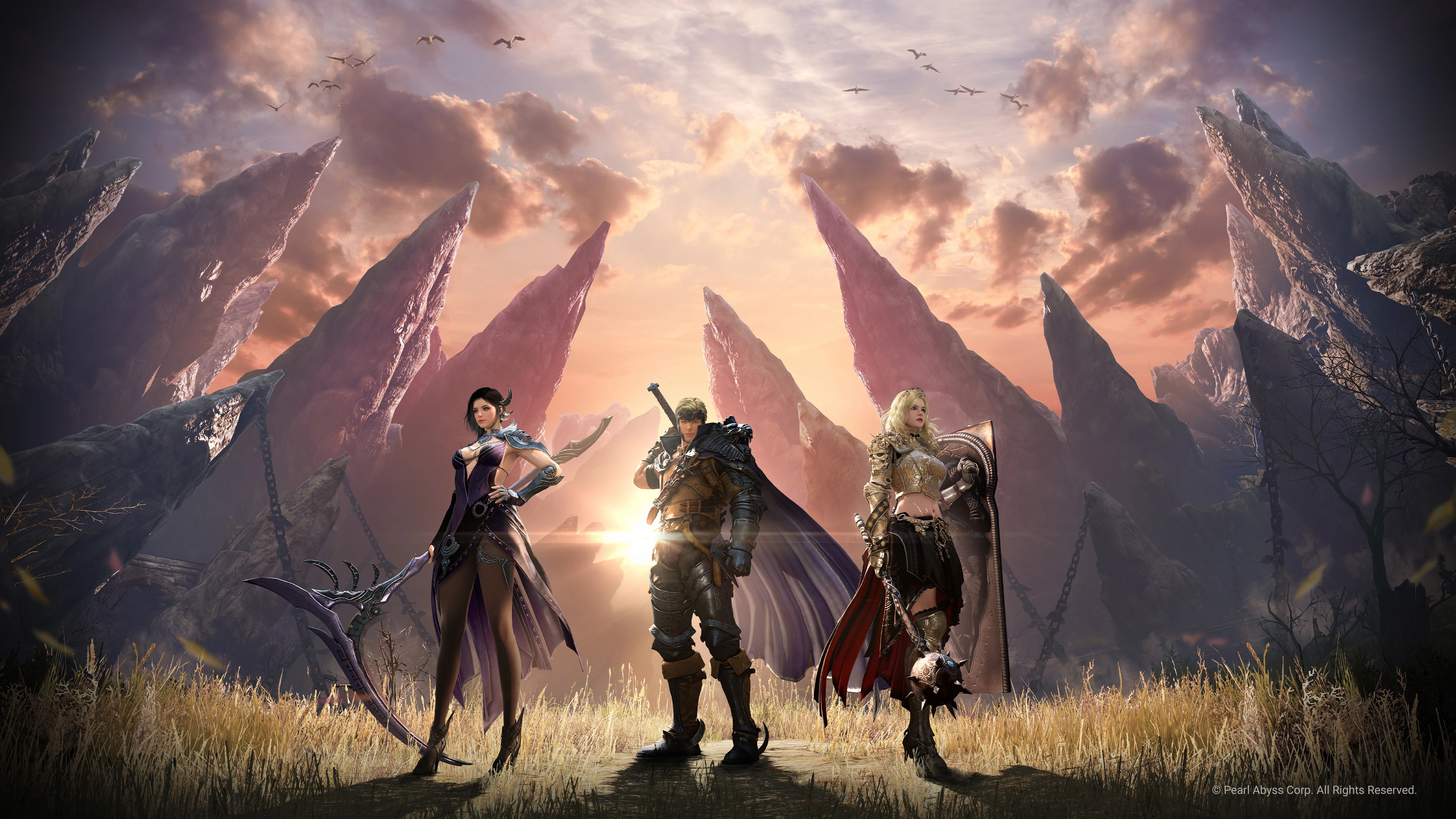

Black Desert Online (Korean: 검은사막) is a sandbox MMORPG developed by Pearl Abyss, and the first and largest game in the Black Desert franchise. It reached Korea in 2015 and North America and Europe on March 3, 2016, and has since been brought to PlayStation and Xbox as well.
Three things set it apart from other games in its genre. Its combat has no target lock, so every attack is aimed and every dodge is timed. Its character creator is detailed enough that Pearl Abyss released it as a free standalone program before the game itself. And its life skills — fishing, cooking, trading, horse breeding and a dozen more — are deep enough that a player can make an entire career out of them without doing much fighting at all.
1 Development✎
Kim Dae-il had already built two online games, R2 and C9, when he founded Pearl Abyss in September 2010. He wanted to make the game he wanted to play, and he began with a small team of people he had worked with for years.
The first thing the studio built was not the game but the engine to run it. Licensing a commercial engine would have been faster, and its bugs would already be documented, but Kim judged that a bought engine also decides much of what a game can be. He wanted no such limits, so Pearl Abyss wrote its own. The engine has been used for almost nothing else since.
The Korean service opened with an open beta in December 2014 and went into full commercial operation the following year. The team stayed small by the standards of the genre and kept developing at pace after launch, which is why the game's update schedule has stayed unusually fast across its first decade.
2 Gameplay✎
2.1 Combat✎
Combat is action-based and has no target lock. Skills are triggered by directional and button combinations rather than picked off a bar, and dodging, blocking and positioning matter as much as damage. The result is closer to a character action game than to the tab-target combat most large MMORPGs use.
Every class gains a second combat identity at high level. An awakening gives the character a new weapon and a full second skill set, while succession instead deepens and rebuilds the original one. Choosing between them changes how a class plays rather than simply making it stronger.
2.2 Classes✎
The game has thirty-two classes. Most are locked to a single appearance and body type, so a class choice is also a character choice, and each one has its own weapon, animation set and story introduction.
The newest is the Agent, added in 2026 — a gunman built around a revolver and grenades, and the brother of the existing Deadeye. Where she fights on the move, he is designed around slow, heavy shots and control of an area, using a weapon called the Hexround in place of the magic most classes carry.
2.3 Life skills✎
Life skills are a parallel game to combat. Gathering, fishing, hunting, cooking, alchemy, processing, farming, trading, horse training, sailing and bartering each have their own progression, and a player can reach the top of any of them without fighting.
They are not a side activity. The high-level economy runs on player-made food, elixirs, ships and gear, so a dedicated life skiller is a supplier the combat players depend on.
2.4 Nodes and workers✎
The map is divided into nodes: farms, mines, forests, hunting grounds and towns. Investing Contribution Points in a node through its node manager lets the player put workers on it and collect what it produces. Connecting a chain of nodes back to a city opens the trade routes that make long-distance selling profitable.
The system rewards planning over play time. A well-built node network earns while the player is offline, which is why many long-term players treat it as the real backbone of their account.
2.5 Enhancement✎
Gear is strengthened with black stones, the same stones the setting's war was fought over. Enhancement is a gamble: attempts can fail, failure builds up a stack that improves the next attempt, and at higher levels a failed attempt can knock the item back down a grade.
It is the most divisive system in the game. It gives progression an open ceiling and a genuine thrill, and it is also the single feature most often blamed for driving players away.
2.6 Player versus player✎
Open-world combat between players is restricted in most of the world and unrestricted in a few regions, notably the Great Valencian Desert. Organized fighting happens at two scales. Guilds fight Node Wars and Conquest Wars for control of territory on the map, while individuals duel in arena modes such as the Arena of Solare and the Red Battlefield.
3 World✎
The game is set on a continent divided between the Republic of Calpheon in the west and the Kingdom of Valencia in the east. Their long war over the black stones underlies the whole setting. The world has grown with almost every expansion and now runs from the starting forests of Balenos out to the demon realm of Edania.
Full article: Regions
4 Release history✎
| Release | Date |
|---|---|
| Korea, open beta | December 17, 2014 |
| Korea, full service | July 14, 2015 |
| North America and Europe | March 3, 2016 |
| Steam | May 24, 2017 |
| Remastered update | 2018 |
| Xbox One | March 4, 2019 |
| PlayStation 4 | August 22, 2019 |
| PlayStation 5, Xbox Series X/S | June 26, 2025 |
The 2018 Remastered update rebuilt the game's lighting, textures and audio rather than adding content, and it remains how the game is presented on storefronts today.
5 Business model✎
Black Desert Online charges once and never again. There is no subscription, and the base game costs about ten US dollars on Steam in most regions. In Korea, Japan and Russia it is free to download instead. The difference dates back to the Western launch, when the publisher wanted to avoid the reputation that free-to-play carried in those markets.
The distinction has softened in practice. Pearl Abyss has given the game away outright on Steam several times, including over the 2024 holidays, in July 2025 and again in December 2025, each time letting players keep it permanently.
A cash shop sells costumes, pets and convenience items, along with a Value Pack that grants experience and marketplace bonuses for thirty days. None of it is required to reach the end of the game, though pets and weight limits are widely treated as close to essential by regular players.
6 Reception✎
Reviews have been consistent for a decade: critics praise how the game looks, how it fights and how much there is to do, and criticize how badly it explains itself. The world, the combat and the character creator draw admiration; the tutorial, the story and the sheer density of overlapping systems draw complaints.
Aggregate scores differ by which version is being counted. The Steam listing carries a Metacritic score of 80, while OpenCritic averages 71 across forty-two critics, with fewer than half recommending it. Steam's own store page reports that more than twenty million people have played it.