Loading history…
iOS 13
This is r1 (the current revision), saved by jack. Full history
|
iOS 13
| |
 i i
| |
| Developer | Apple |
|---|---|
| Announced | June 3, 2019 (WWDC) |
| Initial release | September 19, 2019 |
| Final release | 13.7 (September 1, 2020) |
| Launch devices | iPhone 11 · iPhone 11 Pro · iPhone 11 Pro Max |
| Preceded by | iOS 12 |
| Succeeded by | iOS 14 |
|
iOS
|
|---|
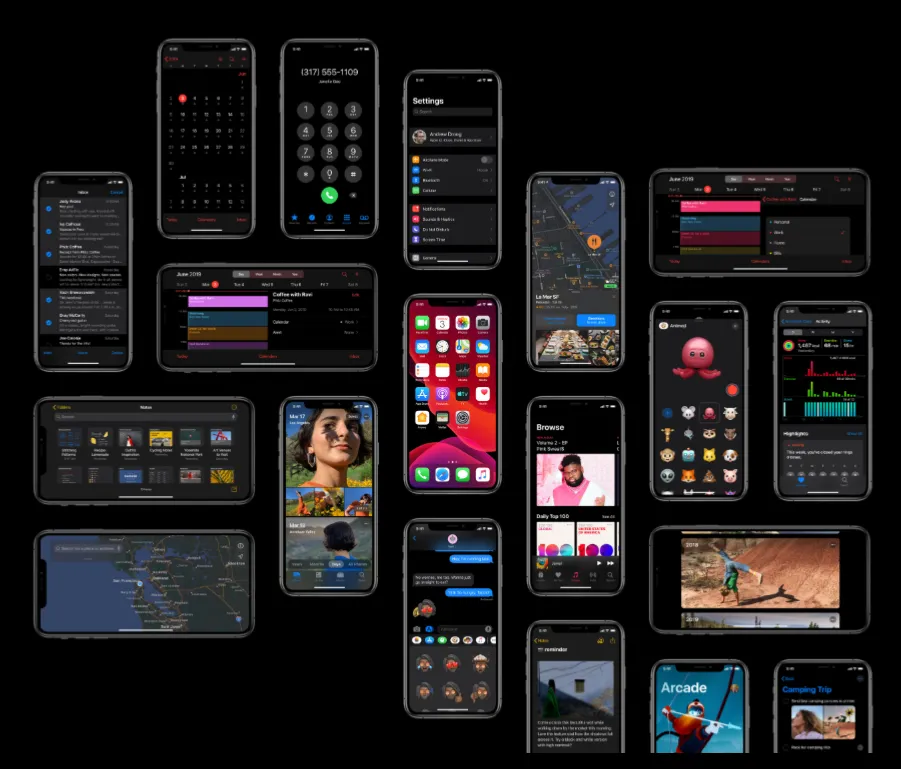
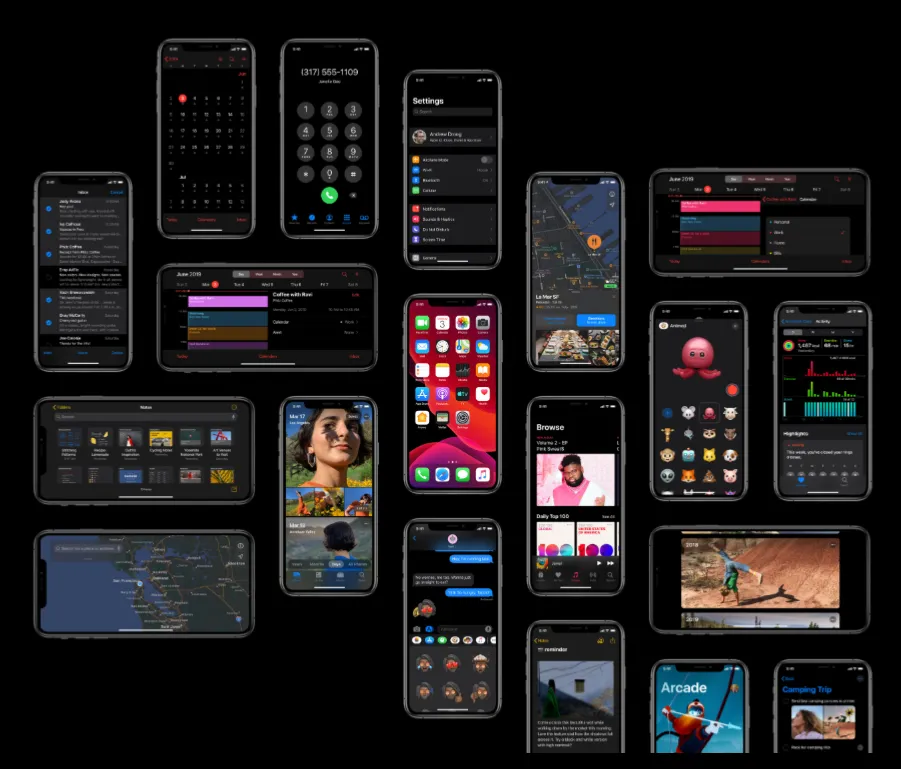
iOS 13 is the thirteenth major release of iOS, released on September 19, 2019, with the iPhone 11 generation. Its face was Dark Mode — the system-wide dark appearance, scheduled or manual, that OLED iPhones had begged for — and its structure changed the platform family: the iPad's build split off as iPadOS, ending "iOS" as the tablet's name and freeing the two interfaces to diverge.
Privacy carried the strategic weight: Sign in with Apple offered an OAuth alternative with relay email addresses and mandatory placement rules that rattled the identity industry, while location permissions gained "just once" and background-tracking alerts. The launch itself was the platform's messiest since iOS 11 — 13.0 was superseded by 13.1 within five days, and the cycle's bug cadence pushed Apple to reorganize how iOS releases are internally tested and staged.
1 Features✎
Dark Mode; Sign in with Apple; the QuickPath swipe keyboard; a rebuilt Reminders; Photos with a curated day/month/year browser and comprehensive editing (including video); Memoji stickers; Look Around in Maps; HomeKit Secure Video; Silence Unknown Callers; ultra-wideband support for the iPhone 11's U1 chip; and Low Data Mode. Downloads got dramatically smaller, and app launches roughly doubled in speed over iOS 12.
2 Supported devices✎
iPhone 11/Pro/Pro Max, iPhone XS/XR/X generations, iPhone 8, iPhone 7, iPhone 6s, iPhone SE, and the seventh-generation iPod touch — dropping the iPhone 5s, iPhone 6 generation, and the last 1 GB-RAM devices.
3 Legacy✎
Dark Mode became a permanent system dimension and web standard (`prefers-color-scheme` adoption traces to this cycle); Sign in with Apple institutionalized privacy as a competitive weapon; and the iPadOS split defined the multi-OS Apple platform family that now spans six systems. Internally, its troubled launch reshaped Apple's release engineering — daily builds gated by default-off feature flags — which the smoother cycles that followed are credited to.
Content available under CC BY-SA 4.0