Space opera
| Space opera | |
|---|---|
 i i
| |
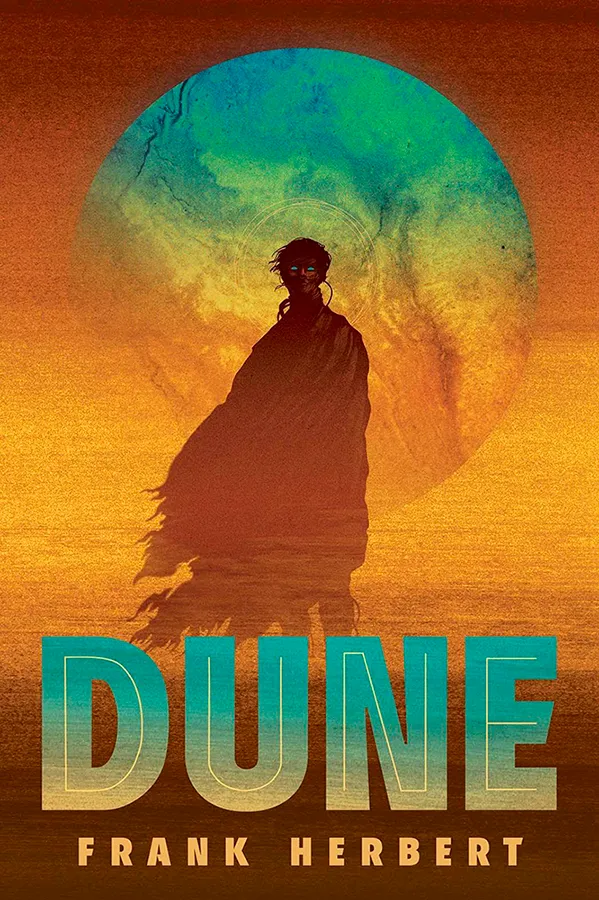
| Frank Herbert's novel Dune (1965) | |
 i i
| |
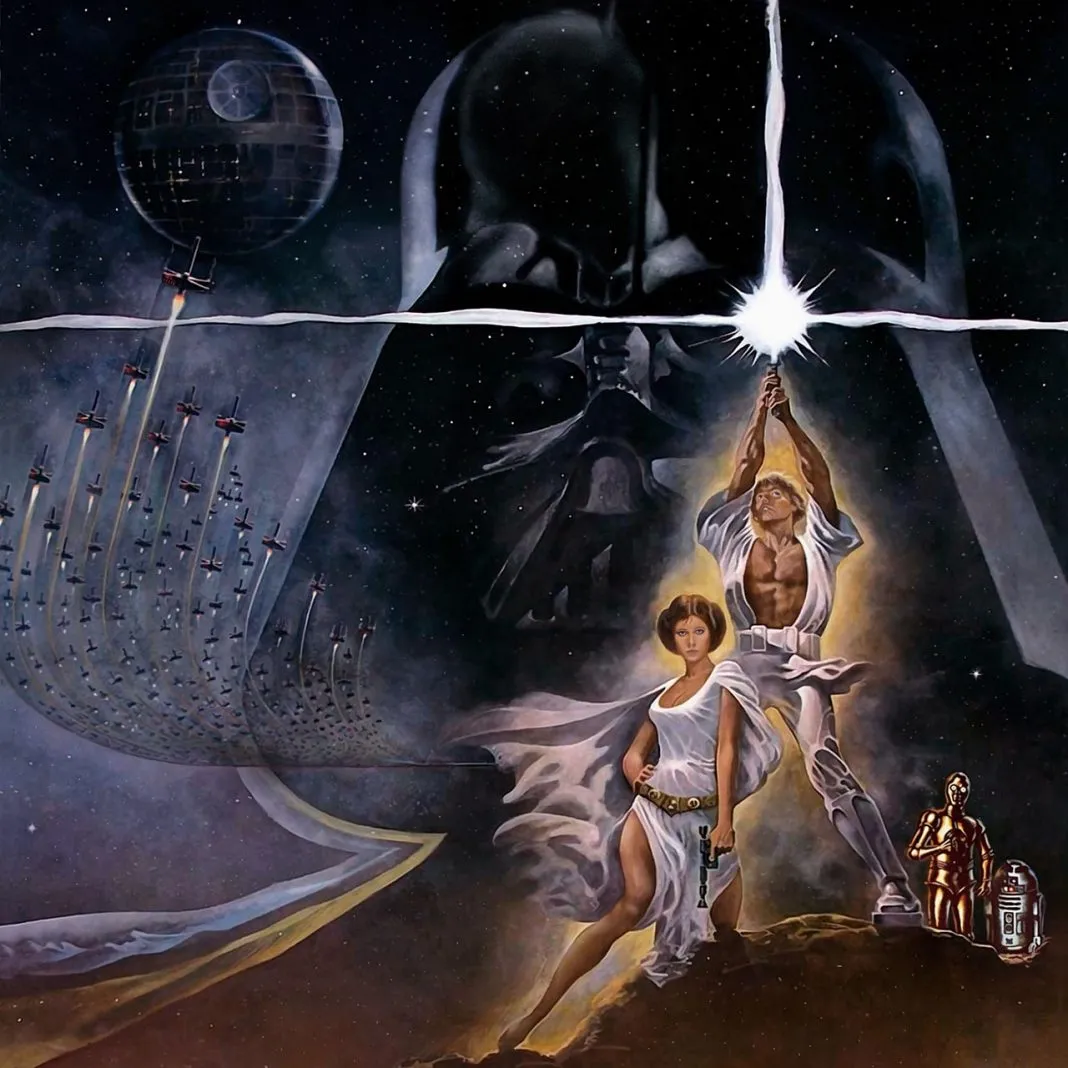
| George Lucas's film Star Wars: A New Hope (1977) | |
| Type | Subgenre of science fiction |
| Term coined | 1941, by Wilson Tucker |
| First established | Late 1920s, in American pulp magazines |
| Key elements | Space travel, galactic empires, alien civilizations, large-scale conflict |
| Related genres | Planetary romance, military science fiction, space Western |
Space opera is a subgenre of science fiction that emphasizes epic adventure in outer space. Space opera stories usually take space travel for granted, often through faster-than-light starships, and play out on a grand scale involving space warfare, alien civilizations, and galactic empires. The focus is typically on dramatic action, heroic characters, and high stakes rather than on scientific accuracy.
Despite the name, space opera has nothing to do with opera music. The term follows the pattern of "soap opera," used for melodramatic radio serials, and "horse opera," used for formulaic Western films. The genre began in American pulp magazines of the late 1920s, fell out of critical favor for decades, and was eventually embraced as a legitimate and popular form of science fiction. Today it thrives across books, film, television, comics, and video games, with Star Wars and Star Trek standing as its most famous examples.
1 Terminology✎
The term "space opera" was coined in 1941 by science fiction fan writer Wilson Tucker in the fanzine Le Zombie. Tucker meant it as an insult: he defined it as a worn-out, formulaic spaceship yarn, the science fiction equivalent of the clichéd Western "horse opera." Critics of the era noted that some space adventure plots were little more than Westerns with the horses swapped for rockets and the six-shooters swapped for ray guns. During the late 1920s and early 1930s, before Tucker's coinage, such stories were often called "super-science epics" instead.
The meaning of the term shifted over time. By the 1970s, following author Brian Aldiss's anthology Space Opera (1974), many readers used it affectionately to mean classic, large-scale space adventure. By the early 1980s the label was being applied to major popular works such as Star Wars, and by the early 1990s space opera was widely recognized as a legitimate genre rather than a put-down.
2 Characteristics✎
Editors David G. Hartwell and Kathryn Cramer describe space opera as colorful, dramatic, large-scale science fiction adventure, usually centered on a sympathetic heroic character, set in the relatively distant future in space or on other worlds, and generally optimistic in tone. Common ingredients include interstellar war, piracy, vast empires, and very large stakes.
Space opera is often contrasted with hard science fiction, which emphasizes scientific accuracy and carefully worked-out technology. Space opera tends to prioritize story and spectacle over physics, freely using devices such as faster-than-light travel. The two approaches are not mutually exclusive, however; some modern space operas, such as the works of Alastair Reynolds, are also scientifically rigorous.
Critics also distinguish space opera from planetary romance. Both feature adventure in exotic settings, but space opera emphasizes travel between the stars, while planetary romance focuses on adventures on a single alien world, as in Edgar Rice Burroughs's Mars stories.
3 History✎
3.1 Early precursors✎
Stories containing elements of space opera appeared long before the genre had a name. Nineteenth-century French authors such as C. I. Defontenay and Camille Flammarion wrote early tales of other worlds, and occasional "proto-space operas" appeared in Victorian and Edwardian science fiction. Scholar E. F. Bleiler identified Robert William Cole's The Struggle for Empire: A Story of the Year 2236 (1900), which depicts an interstellar war between Earth and a race from Sirius, as the first true space opera.
3.2 Pulp era✎
Space opera proper took shape in the late 1920s in American pulp magazines such as Amazing Stories and Weird Tales. Unlike earlier space stories, which dwelled on alien invasions of Earth or the invention of a spaceship by a lone genius, these new tales simply assumed space travel existed and jumped straight into adventure among the stars. Early examples include J. Schlossel's "Invaders from Outside" (1925) and Edmond Hamilton's "Crashing Suns" (1928).
The writer most often called the father of the genre is E. E. "Doc" Smith. His debut, The Skylark of Space (1928, written with Lee Hawkins Garby), is frequently described as the first great space opera, and his later Lensman series became enormously influential. Smith, Hamilton, John W. Campbell, and Jack Williamson dominated the form through the 1930s and 1940s, and the genre also reached the screen through comic strip adaptations such as the Flash Gordon film serial (1936). By the early 1940s, however, the repetitive excess of imitators led many fans to dismiss the entire form, which is exactly the mood that produced Tucker's dismissive label.
3.3 Revival and mainstream success✎
Writers such as Poul Anderson and Gordon R. Dickson kept large-scale space adventure alive through the 1950s, and Japan developed its own space opera tradition in 1950s tokusatsu films such as Warning from Space (1956) and Battle in Outer Space (1959). The genre then reached unprecedented audiences through television and film. Star Trek (1966), created by Gene Roddenberry, Doctor Who (1963), and above all the Star Wars films (1977), created by George Lucas, brought space opera to the center of popular culture. In print, the German Perry Rhodan series (1961) grew into one of the most successful science fiction book series ever published. From 1982 to 2002, the Hugo Award for Best Novel frequently went to space opera works.
3.4 New space opera✎
Beginning in the 1970s, a group of writers, many of them British, set out to reinvent the genre. Milestones included M. John Harrison's The Centauri Device (1975) and a 1984 "call to arms" editorial in the magazine Interzone. The resulting "new space opera," which developed alongside cyberpunk and absorbed some of its influence, is darker than the classic form, moves away from simple "triumph of mankind" plots, and puts greater weight on characterization, literary quality, and contemporary social themes while keeping the traditional interstellar scale. Leading practitioners include Iain M. Banks, Alastair Reynolds, Ken MacLeod, Peter F. Hamilton, Stephen Baxter, and Ann Leckie.
4 Related genres✎
Space opera overlaps heavily with several neighboring genres. Military science fiction concentrates on space battles, futuristic weapons, and interstellar war; works such as Lois McMaster Bujold's Vorkosigan Saga, the Battlestar Galactica franchise, and Robert A. Heinlein's Starship Troopers (1959) are sometimes called "military space opera." A rough distinction is that space opera protagonists are usually civilians or paramilitary figures rather than enlisted soldiers.
The space Western treats outer space as "the final frontier" and borrows themes from the American Western, sometimes subtly and sometimes literally. Gene Roddenberry pitched the original Star Trek as a space Western, and the series Firefly (2002) and its film follow-up Serenity (2005) embraced frontier towns, horses, and classic Western styling outright. The conventions of space opera have also been affectionately parodied in films such as Spaceballs (1987) and Galaxy Quest (1999).