George Lucas
| George Lucas | |
|---|---|
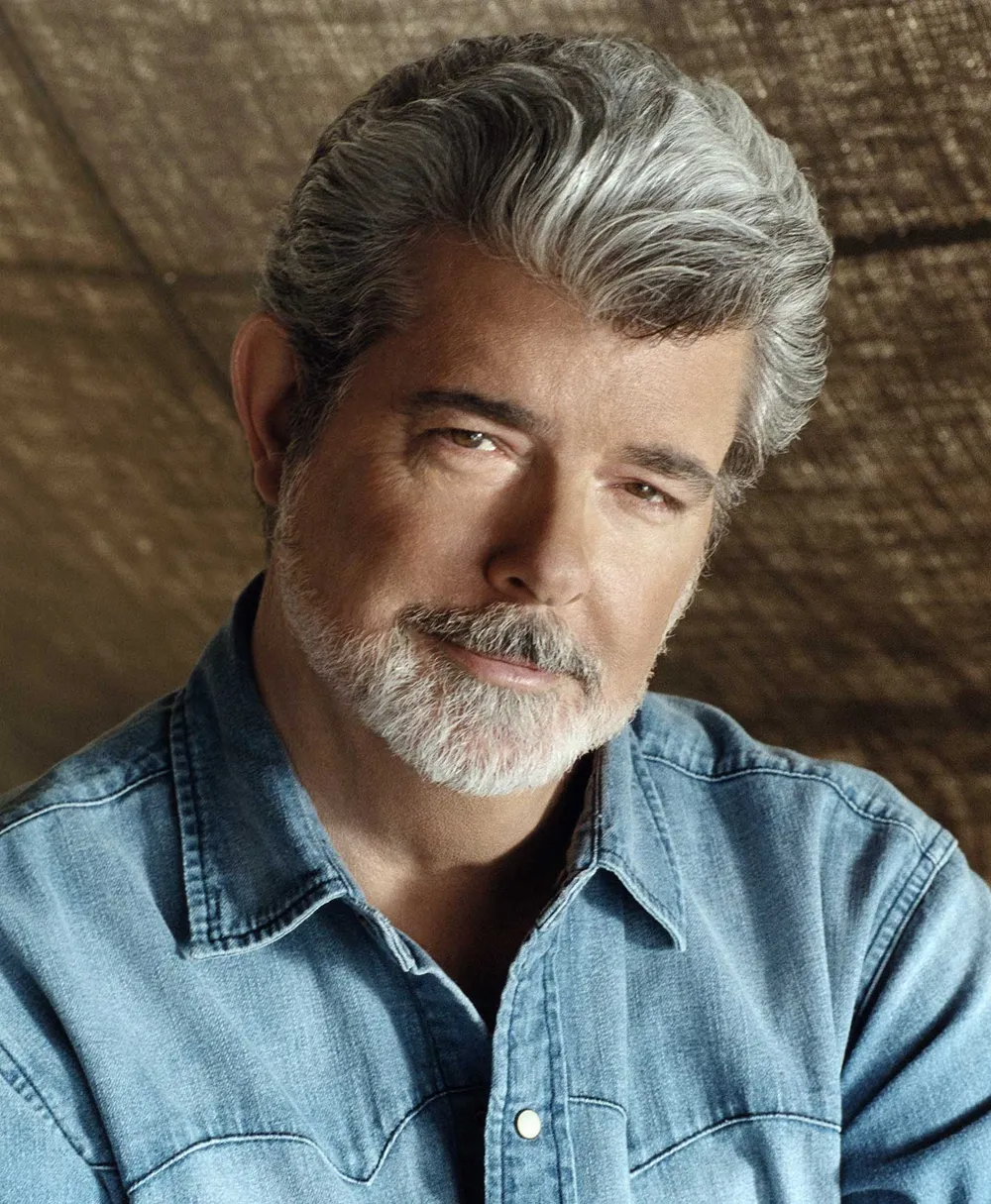 i i
| |
| Born | George Walton Lucas Jr. 1944.05.14 Modesto, California, U.S. |
| Education | University of Southern California |
| Occupations | Filmmaker · Producer · Screenwriter · Entrepreneur |
| Years active | 1965–present |
| Known for | Star Wars · Indiana Jones |
| Companies | Lucasfilm (founder) Industrial Light & Magic (founder) Skywalker Sound (founder) |
| Spouses | Marcia Griffin (1969–1983) Mellody Hobson (2013–present) |
| Children | 4 |
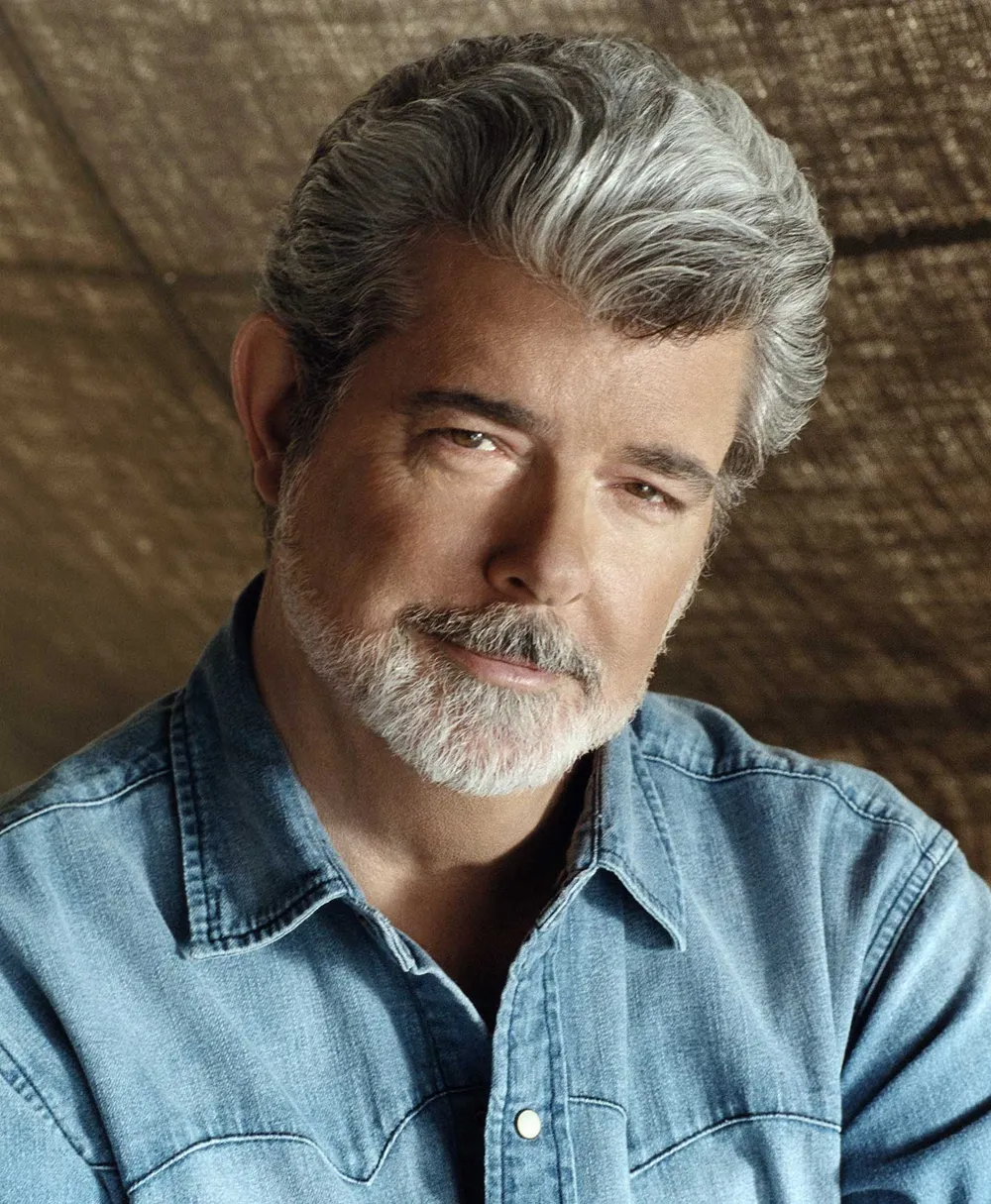
George Lucas (born 1944.05.14) is an American filmmaker, producer, and entrepreneur. He is best known as the creator of the Star Wars and Indiana Jones franchises, two of the most successful series in movie history. Lucas founded the production company Lucasfilm and the visual effects studio Industrial Light & Magic, and his push for new filmmaking technology changed how movies are made around the world.
Lucas directed only six feature films in his career, but his influence reaches far beyond the director's chair. As a writer, producer, and businessman, he helped invent the modern blockbuster, pioneered digital filmmaking and computer-generated effects, and built one of the first great media empires owned by a single filmmaker. In 2012 he sold Lucasfilm to The Walt Disney Company for about $4 billion and has spent much of his fortune on education and the arts, including the Lucas Museum of Narrative Art in Los Angeles.
1 Early life✎
George Walton Lucas Jr. was born on 1944.05.14 in Modesto, California, where his father ran a stationery store and owned a walnut ranch. As a teenager, Lucas cared far more about cars than school. He dreamed of becoming a professional race car driver, but a near-fatal car crash just before his high school graduation in 1962 ended that dream and changed the direction of his life.
Lucas attended Modesto Junior College, where he became interested in cameras and filmmaking, and then transferred to the film school at the University of Southern California (USC). There he made several award-winning student films, including a short science fiction movie called Electronic Labyrinth: THX 1138 4EB. At USC he also met many of the young filmmakers who would later be called the "New Hollywood" generation, and he formed a close friendship with director Francis Ford Coppola.
2 Career✎
2.1 Early films✎
After film school, Lucas and Coppola founded a small studio in San Francisco called American Zoetrope. Its first project was THX 1138 (1971), an expanded version of Lucas's student film about a cold future society where emotions are illegal. The movie failed at the box office, but it showed Lucas's talent for building strange, believable worlds. That same year, Lucas started his own company, Lucasfilm.
His second film could not have been more different. American Graffiti (1973) was a warm comedy about teenagers cruising the streets of a small California town in 1962, inspired by Lucas's own youth in Modesto. Made for less than a million dollars, it became one of the most profitable films ever produced and earned five Academy Award nominations, including Best Director. Its success gave Lucas the freedom to make his next idea: a space adventure no studio believed in.
2.2 Star Wars✎
Star Wars (1977) was a gamble. Lucas spent years writing drafts of a "space fantasy" that mixed old movie serials, samurai films by Akira Kurosawa, westerns, and classical mythology. Studios kept turning it down before 20th Century-Fox finally agreed to fund it. The shoot was so difficult that Lucas doubted the film would work at all.
Instead, it became a phenomenon. Star Wars broke box office records, won seven Academy Awards, and changed Hollywood forever. Just as important was a business decision almost no one noticed at the time: Lucas had traded part of his directing fee for the merchandising and sequel rights. Toys, books, and follow-up films made him independently wealthy and gave him something few directors ever have — complete control over his own creation.
Lucas wrote and produced the sequels The Empire Strikes Back (1980) and Return of the Jedi (1983), but hired other directors so he could focus on running his growing companies. During the same years he teamed up with his friend Steven Spielberg to create Indiana Jones, the adventure series starring Harrison Ford that began with Raiders of the Lost Ark (1981). Lucas created the character and the stories, while Spielberg directed.
2.3 Technology and Lucasfilm✎
To make Star Wars possible, Lucas founded the visual effects company Industrial Light & Magic (ILM) in 1975. ILM went on to create groundbreaking effects for hundreds of films, from Jurassic Park to the Marvel movies, and remains the most famous effects studio in the world. Lucas also built Skywalker Sound, a leader in movie sound design, and created the THX system to guarantee high-quality sound in theaters.
Lucasfilm's computer division developed early digital editing and computer graphics tools. In 1986 Lucas sold its computer graphics group to Steve Jobs, who turned it into Pixar, the studio behind Toy Story. Lucas's companies also produced influential video games through LucasArts and helped push Hollywood toward digital cameras and digital theaters.
2.4 Prequels and later work✎
After sixteen years away from directing, Lucas returned to tell the story of how Anakin Skywalker became Darth Vader. He wrote and directed the prequel trilogy: The Phantom Menace (1999), Attack of the Clones (2002), and Revenge of the Sith (2005). The films were enormous hits and technical landmarks — Attack of the Clones was one of the first major movies shot entirely on digital cameras — though critics and some fans were divided about their stories and dialogue. Their reputation has improved over time, especially among viewers who grew up with them.
Lucas then created and produced the animated series Star Wars: The Clone Wars and produced the World War II aviation drama Red Tails (2012), about the Tuskegee Airmen, which he largely funded himself when studios refused.
2.5 Sale to Disney and retirement✎
In 2012.10, Lucas announced he was selling Lucasfilm — including Star Wars and Indiana Jones — to The Walt Disney Company for about $4.05 billion, with longtime producer Kathleen Kennedy taking over the company. Lucas said he wanted the saga to live on for new generations while he moved into retirement. He pledged the majority of the sale money to charity, mostly for education.
Lucas has had little involvement in the Disney-era Star Wars films, and he has sometimes spoken openly about his mixed feelings watching others guide his creation. Since retiring from blockbuster filmmaking, he has focused on philanthropy, his art collection, and his museum project.
3 Lucas Museum of Narrative Art✎
Lucas spent decades collecting what he calls "narrative art" — paintings, illustrations, comics, photographs, and film art that tell stories. To share the collection, he and his wife Mellody Hobson are personally funding the Lucas Museum of Narrative Art, a project costing well over a billion dollars.
After earlier plans for Chicago and San Francisco fell through, the museum was built in Exposition Park in Los Angeles, next to the Los Angeles Memorial Coliseum. The futuristic 300,000-square-foot building was designed by architect Ma Yansong, and the museum opens to the public on 2026.09.22. Its roughly 35 galleries hold tens of thousands of works, from Norman Rockwell paintings and classic comic art to photography and original Star Wars props and costumes, with Lucas himself curating the opening exhibitions.
4 Personal life✎
Lucas married film editor Marcia Griffin in 1969. Marcia Lucas edited many of his films and shared an Academy Award for editing Star Wars; many film historians credit her work as essential to the film's success. The couple adopted a daughter before divorcing in 1983. Marcia Lucas died in 2026.05.
As a single father, Lucas adopted two more children. In 2013 he married Mellody Hobson, a Chicago businesswoman and investment company president, and the couple have one daughter. Lucas has long lived and worked in Northern California, centered on Skywalker Ranch, the filmmaking retreat he built in Marin County.
Lucas is one of the most generous donors in the entertainment industry. Through the George Lucas Educational Foundation and other gifts, he has given hundreds of millions of dollars to schools, universities, and arts programs, and he signed the Giving Pledge, promising to donate most of his wealth.
5 Awards and legacy✎
Lucas has received nearly every major honor the film world offers, including the Irving G. Thalberg Memorial Award from the Academy of Motion Picture Arts and Sciences, the American Film Institute Life Achievement Award, the Kennedy Center Honors, the National Medal of Arts, and an honorary Palme d'Or from the Cannes Film Festival in 2024.
His legacy runs in two directions. As a storyteller, he created modern mythology — Star Wars is woven into global culture, and its films, shows, and characters continue almost fifty years after the original movie. As a technologist and businessman, he transformed the movie industry itself: the effects tools, sound systems, digital cameras, and even the blockbuster business model that Hollywood depends on today all carry his fingerprints.
6 Selected filmography✎
| Year | Title | Role |
|---|---|---|
| 1971 | THX 1138 | Director · Writer |
| 1973 | American Graffiti | Director · Writer |
| 1977 | Star Wars | Director · Writer |
| 1980 | The Empire Strikes Back | Writer · Executive producer |
| 1981 | Raiders of the Lost Ark | Story · Executive producer |
| 1983 | Return of the Jedi | Writer · Executive producer |
| 1984 | Indiana Jones and the Temple of Doom | Story · Executive producer |
| 1989 | Indiana Jones and the Last Crusade | Story · Executive producer |
| 1999 | The Phantom Menace | Director · Writer |
| 2002 | Attack of the Clones | Director · Writer |
| 2005 | Revenge of the Sith | Director · Writer |
| 2008 | Indiana Jones and the Kingdom of the Crystal Skull | Story · Executive producer |
| 2012 | Red Tails | Executive producer |
7 Other wikis✎
- George Lucas at Wikipedia