MacBook Pro
|
MacBook Pro
Fast runs in the family.
|
 i |
| Official MacBook Pro site — Apple |
[ Show / Hide ]
| |||||||||||||||


|
[ Pro ]
[ Air ]
[ Neo ]
[ MacBook ]
| ||||||||||||||||||||||||||||||||||||||||||||||||||||||||||||||||||||||||||||||||||||||||||||||||||||||||||||||||||||||||||||
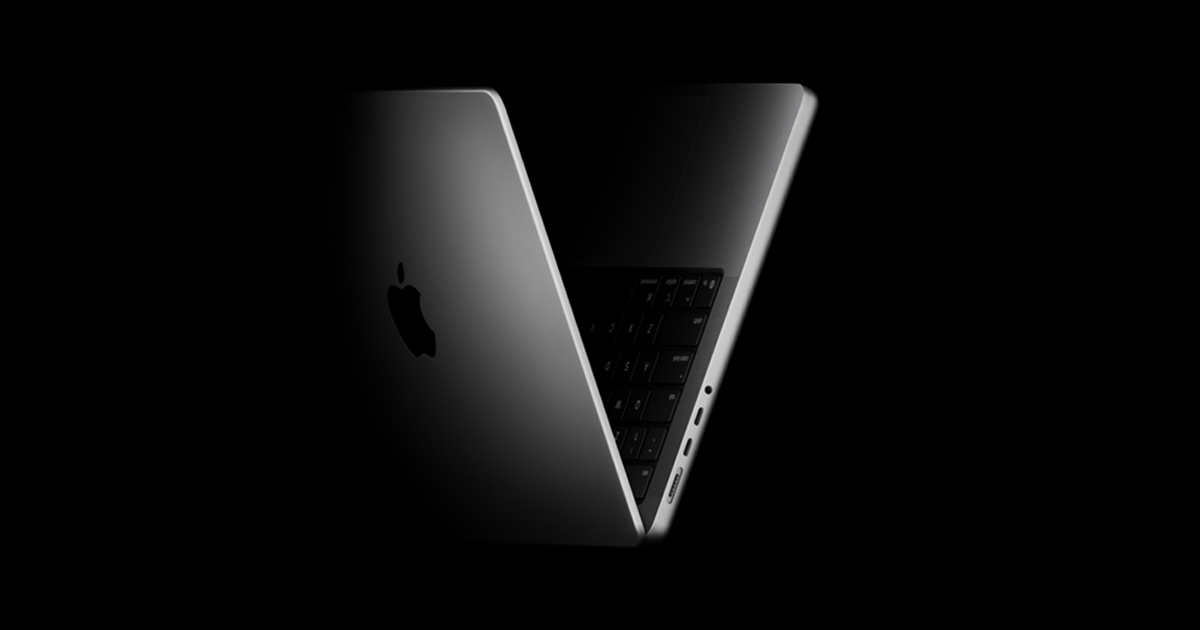
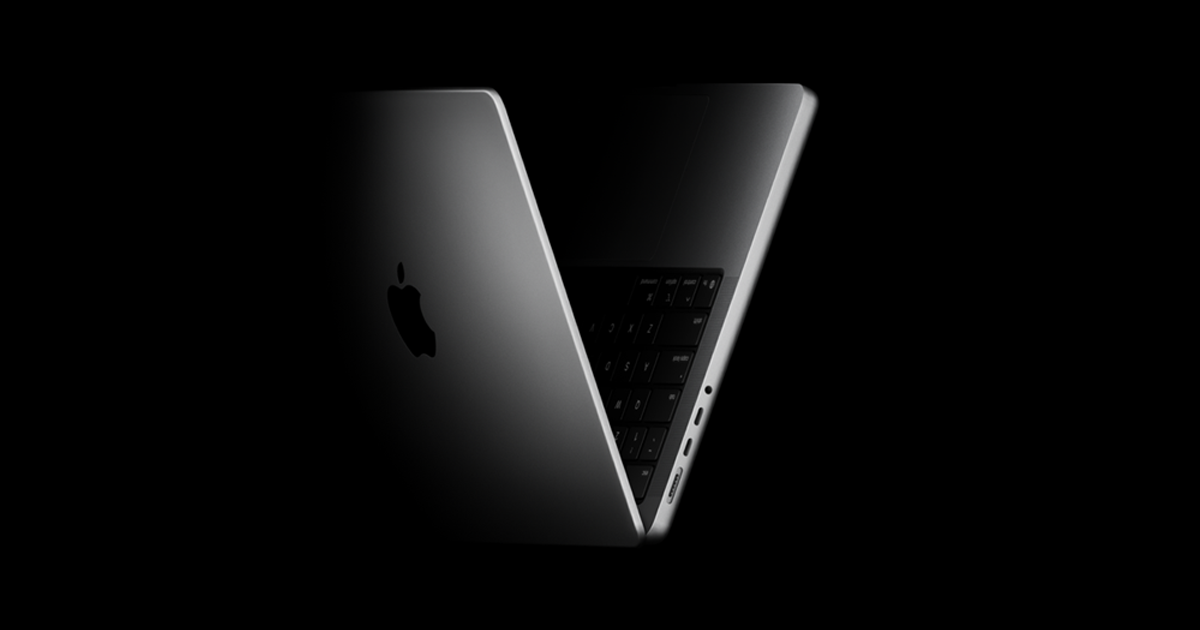
MacBook Pro is Apple's line of high-end laptops, sold above the MacBook Air and the budget MacBook Neo. Steve Jobs introduced it at Macworld Expo in San Francisco on January 10, 2006, as the first Mac laptop with an Intel processor.[1] It replaced the PowerBook, which had run on PowerPC chips.
The line has been rebuilt from scratch several times, and each redesign has a reputation of its own. The 2008 unibody models made carved aluminum Apple's signature look. The 2016 redesign is remembered for removing nearly every port and adding the Touch Bar, a touchscreen strip that few people asked for. The 2021 redesign quietly undid most of those decisions.
Today the line comes in 14-inch and 16-inch sizes, both powered by Apple's own M-series chips. Despite the "Pro" name, a large share of buyers are students, office workers, and casual users who simply want a better screen and speakers than the Air offers.
1 History✎
1.1 Aluminum PowerBook successor (2006–2008)✎
The first MacBook Pro looked almost identical to the aluminum PowerBook G4 it replaced, but the inside was new. Apple claimed up to four times the performance of the PowerBook, thanks to Intel's dual-core Core Duo chip. The 15-inch base model cost $1,999, and a 17-inch model followed on April 24, 2006.[1][2]
It also debuted two features that became Apple trademarks. MagSafe was a magnetic power connector that popped loose when someone tripped over the cord, instead of dragging the laptop off the table. The built-in iSight webcam made video calls possible without an add-on camera.[1]
Unlike later models, owners could swap the battery and RAM themselves. Replacing the hard drive, however, meant taking most of the machine apart.
1.2 Unibody (2008–2012)✎
On October 14, 2008, Apple introduced a 15-inch model built from a single block of aluminum, a process it called unibody construction. The base model again cost $1,999. The 17-inch model kept the older design for a few more months.[3] Machines cut the case, the keyboard holes, and even the tiny speaker perforations directly out of the metal, and the result was thinner and stiffer than before.
The 17-inch model switched to the unibody design in January 2009.[4] That June, a 13-inch model replaced the aluminum MacBook, and the whole line moved to batteries sealed inside the case. Apple argued that a built-in battery could last up to 1,000 recharges before dropping to 80 percent of its capacity, nearly three times longer than a conventional one.[5]
The unibody models kept a DVD drive and standard laptop RAM and hard drives, so owners could upgrade them cheaply for years. That made them favorites on the used market long after newer models arrived. The non-Retina 13-inch model stayed on sale, essentially unchanged, until October 2016.
1.3 Retina display (2012–2015)✎
On June 11, 2012, Apple introduced a 15-inch MacBook Pro with a Retina display of more than 5 million pixels, over twice as many as a 1080p HDTV. Apple scaled the interface so text looked sharper instead of smaller. The new model was 0.71 inches thick and started at $2,199.[6]
To make room, Apple dropped the DVD drive, the Ethernet port, and FireWire. It soldered the RAM to the logic board, which ended the era of easy upgrades. A 13-inch Retina model followed on October 23, 2012, and both sizes received yearly chip updates through 2015.[7]
The 2015 15-inch model became something of a legend. When the next generation proved troublesome, many professionals held on to it instead of upgrading. Its 99.5-watt-hour battery sat just under the 100-watt-hour limit that US airlines allow in the cabin without special approval.[8]
1.4 Touch Bar and butterfly keyboard (2016–2020)✎
On October 27, 2016, Apple unveiled its thinnest and lightest MacBook Pro yet. The row of function keys was replaced by the Touch Bar, a thin touchscreen whose buttons changed with each app. A Touch ID fingerprint sensor joined it, and every port except the headphone jack was replaced by USB-C ports supporting Thunderbolt 3. The 15-inch model started at $2,399.[9]
The changes went over badly with many professionals. Owners needed adapters, nicknamed "dongles," for ordinary USB drives, HDMI displays, and SD cards. Losing the physical Escape key was a serious annoyance for programmers. The glowing Apple logo on the lid, a longtime signature of Mac laptops, was also gone.[10]
The biggest problem was the butterfly keyboard. Its ultra-thin key mechanism let tiny bits of dust jam keys or repeat keystrokes, and Apple revised it several times without fully solving the problem. The fallout is covered under Problems and lawsuits below.
Apple began walking back the design on November 13, 2019. The new 16-inch model took the place of the 15-inch and returned to a scissor-switch keyboard with a physical Escape key. Its 100-watt-hour battery was the largest Apple had ever put in a laptop, landing exactly at the airline limit.[11] The 13-inch model got the same keyboard on May 4, 2020.[12]
1.5 Apple silicon arrives (2020–2023)✎
On November 10, 2020, Apple put its own M1 chip in the 13-inch MacBook Pro, alongside the MacBook Air and Mac mini, the first Macs to leave Intel behind. The outside was unchanged, Touch Bar included, but battery life and speed improved dramatically. Apple's Rosetta 2 translation layer let most older Intel apps run without changes.[13]
The trade-off was that memory and storage became part of the chip package or the logic board. Buyers had to choose their configuration at purchase, because nothing could be upgraded later.
The 13-inch Touch Bar design received one more update with the M2 chip in 2022. Apple dropped it in October 2023, when the M3 models arrived, taking the Touch Bar with it.[14]
1.6 Liquid Retina XDR (2021–present)✎
On October 18, 2021, Apple introduced redesigned 14-inch and 16-inch models with the M1 Pro and M1 Max chips, starting at $1,999 and $2,499. Reviewers widely read the redesign as an apology for 2016. The HDMI port, SD card slot, and MagSafe came back, and the Touch Bar was replaced with full-size function keys.[15]
The new Liquid Retina XDR display used mini-LED backlighting to reach 1,600 nits for HDR highlights, with a 120 Hz refresh rate that Apple calls ProMotion. The screen also wraps around the 1080p webcam, creating a notch at the top. The menu bar sits on either side of it, a compromise that still divides users.[15]
The design has stayed the same since, with yearly chip upgrades. The M2 Pro and M2 Max arrived in January 2023. The M3 family followed in October 2023, when Pro and Max models gained a darker Space Black finish.[16] The M4 family arrived on October 30, 2024, adding Thunderbolt 5 on Pro and Max models, 1,000-nit brightness for everyday content, and a 12-megapixel Center Stage camera.[17]
The 14-inch model with the base M5 chip launched in October 2025 at $1,599.[18] M5 Pro and M5 Max models in both sizes followed in March 2026, with doubled base storage and starting prices $200 higher than the M4 Pro versions.[19]
2 Current lineup✎
| Model | Chip options | Max memory | Ports | Price at launch |
|---|---|---|---|---|
| 14-inch | M5 (10-core CPU, 10-core GPU) | 32GB | 3 × Thunderbolt 4, HDMI, SDXC, MagSafe 3, headphone jack | $1,599 (Oct. 2025) |
| 14-inch | M5 Pro / M5 Max | 64GB / 128GB | 3 × Thunderbolt 5, HDMI, SDXC, MagSafe 3, headphone jack | $2,199 / $3,599 |
| 16-inch | M5 Pro / M5 Max | 64GB / 128GB | 3 × Thunderbolt 5, HDMI, SDXC, MagSafe 3, headphone jack | $2,699 / $3,899 |
Every current model has a Liquid Retina XDR display rated at 1,600 nits peak HDR brightness, with an optional nano-texture coating that cuts glare. Both sizes come in Space Black and Silver. Apple rates battery life at up to 24 hours, the longest of any Mac.[20][19]
3 Design✎
3.1 Display✎
MacBook Pro screens used a 16:10 aspect ratio for most of the line's history, slightly taller than the 16:9 screens common on Windows laptops. The extra height leaves more room for documents, code, and editing timelines. Since 2021 the screen extends up around the camera, so current models measure 14.2 and 16.2 inches diagonally.[15]
3.2 Keyboard and trackpad✎
The keyboard is the part of the MacBook Pro whose history people remember most. After the butterfly years, Apple returned to scissor switches, which are slightly thicker but far more reliable. The trackpad, by contrast, has been a consistent strength, and its glass Force Touch surface simulates a click without actually moving.
3.3 Ports✎
Ports are the clearest record of Apple changing its mind. Models from 2006 to 2015 had a mix of USB, FireWire, Thunderbolt, and MagSafe. The 2016 to 2020 models had only USB-C and a headphone jack, and the current models restored HDMI, an SD card reader, and MagSafe 3 alongside three Thunderbolt ports.[9][15]
3.4 Speakers✎
The speakers have been a quiet selling point since the 16-inch model of 2019. It introduced a six-speaker system whose woofers are arranged to cancel out each other's vibration, so the case does not buzz at high volume.[11] The 2021 redesign carried the same idea into both sizes, with two tweeters and four of these force-canceling woofers.[15]
4 Problems and lawsuits✎
4.1 Butterfly keyboard✎
Apple launched a free keyboard repair program in June 2018, but repairs often replaced a failed butterfly keyboard with another one that failed the same way. A 2018 class-action lawsuit accused Apple of knowing about the defect and hiding it. Apple settled for $50 million in 2022 without admitting wrongdoing.[21]
Payouts ranged from $50 for keycap repairs to $395 for multiple keyboard replacements. The settlement covered buyers in seven states, including California, New York, and Florida.[22]
4.2 Flexgate✎
In some 2016 and later models, the thin ribbon cables connecting the display to the logic board could wear out after repeated opening and closing. Affected screens first showed uneven "stage light" glowing along the bottom edge, then lost their backlight entirely. The problem became known as Flexgate. In May 2019, Apple began a free repair program for the 13-inch 2016 models.[23]
4.3 Graphics failures✎
Some 15-inch and 17-inch models from 2011 through 2013 suffered failing graphics chips, causing distorted video, blank screens, and unexpected restarts. In February 2015, Apple began offering free repairs and refunds for affected machines.[24]
5 Trivia✎
- Until 2016, the Apple logo on the lid glowed. It was lit from behind by the display's own backlight, so it dimmed and brightened along with the screen.[10]
- Apple dropped the startup chime that Macs had played for decades in 2016. It returned in 2020 with macOS Big Sur.[25]
- The original MacBook Pro shipped with a small Apple Remote. With the Front Row app, it turned the laptop into a living-room media player.[1]
- The "Pro" label is more about tier than audience. Apple uses it the same way across the iPhone, iPad, and AirPods lines.
6 See also✎
- Apple Introduces MacBook Pro — Apple, January 10, 2006
- Apple Introduces 17-inch MacBook Pro — Apple, April 24, 2006
- New MacBook Family Redefines Notebook Design — Apple, October 14, 2008
- Apple announces unibody 17-inch MacBook Pro — TechCrunch, January 6, 2009
- Apple Updates MacBook Pro Family with New Models & Innovative Built-in Battery — Apple, June 8, 2009
- Apple Introduces All New MacBook Pro with Retina Display — Apple, June 11, 2012
- Apple Introduces 13-inch MacBook Pro with Retina Display — Apple, October 23, 2012
- MacBook Pro (Retina, 15-inch, Mid 2015) – Technical Specifications — Apple Support
- Apple Unveils Groundbreaking New MacBook Pro — Apple, October 27, 2016
- Why Did Apple Get Rid Of The Glowing Logo On MacBooks? — BGR, April 14, 2026
- Apple Introduces 16-inch MacBook Pro, the World's Best Pro Notebook — Apple, November 13, 2019
- Apple Updates 13-inch MacBook Pro with Magic Keyboard — Apple, May 4, 2020
- Introducing the Next Generation of Mac — Apple, November 10, 2020
- Apple kills off 13-inch MacBook Pro, Touch Bar is dead — MobileSyrup, October 30, 2023
- Apple Unveils Game-Changing MacBook Pro — Apple, October 18, 2021
- Apple Unveils New MacBook Pro Featuring M3 Family of Chips — Apple, October 30, 2023
- New MacBook Pro Features M4 Family of Chips and Apple Intelligence — Apple, October 30, 2024
- Apple updates 14-inch MacBook Pro with M5 chip and 24-hour battery life, starting at $1,599 — Notebookcheck, October 2025
- Apple jacks up MacBook pricing with M5 Pro, Max debut — The Register, March 3, 2026
- MacBook Pro — Apple, accessed October 2026
- Apple agrees to pay $50 million to settle butterfly keyboard lawsuit — Macworld, July 2022
- Apple has finally started sending out payments from its butterfly keyboard settlement — Engadget
- 'Flexgate' Display Issues Affecting 2016 MacBook Pro and Later — MacRumors
- Apple Offers Extended Coverage For 2011-2013 MacBook Pros With Video Issues — TechCrunch, February 19, 2015
- Apple restores Mac startup chime — The Register, June 24, 2020