Loading history…
iOS 14
This is r1 (the current revision), saved by jack. Full history
|
iOS 14
| |
 i i
| |
| Developer | Apple |
|---|---|
| Announced | June 22, 2020 (WWDC, online) |
| Initial release | September 16, 2020 |
| Final release | 14.8.1 (October 26, 2021) |
| Launch devices | iPhone 12 generation (October 2020) |
| Preceded by | iOS 13 |
| Succeeded by | iOS 15 |
|
iOS
|
|---|
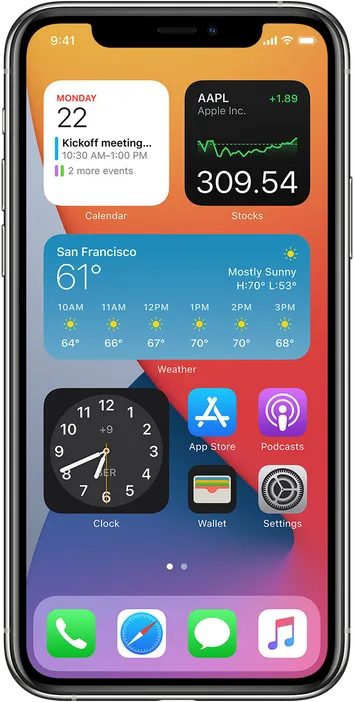
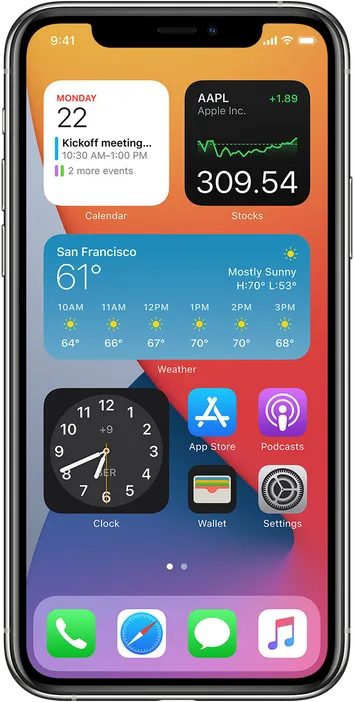
iOS 14 is the fourteenth major release of iOS, released on September 16, 2020 — announced at the first online-only WWDC of the pandemic, and shipped with barely a day's notice to developers, a scheduling stunt the iPhone 12 generation's October delay produced. It changed the home screen more than any release since 2007: widgets left their sidebar ghetto and landed on the grid in three sizes, the App Library auto-organized the overflow, and whole pages could be hidden — kicking off a viral home-screen customization wave (and, via Shortcuts icon aliasing, the custom-icon aesthetic economy).
Its second act shipped in the spring: App Tracking Transparency (14.5, April 2021) required user permission for cross-app tracking, at a stroke rewriting mobile advertising economics — Meta alone attributed a ten-billion-dollar revenue hit to it — and making iOS 14 the most industry-shaking privacy release in the platform's history.
1 Features✎
Home-screen widgets and App Library; App Clips (sub-10 MB app slices launched from codes and links); compact UI for calls and Siri (ending the full-screen takeover); Picture in Picture on iPhone; default browser and mail app choice; Back Tap accessibility gestures; Translate; cycling and EV routing in Maps; and privacy "nutrition labels" in the App Store. The 14.5 update added ATT, Apple Watch unlocking for masked faces, and AirTag support.
2 Supported devices✎
Every iOS 13 device — the iPhone 12 and iPhone 11 generations back through iPhone 6s and the first iPhone SE, plus the seventh-generation iPod touch. The second consecutive zero-drop year.
3 Legacy✎
Widgets and the App Library ended the static-grid era for good — the current customizable home screen builds directly on this release — and App Clips previewed the instant-software model. But ATT is the legacy history will file it under: the single OS switch that forced the advertising industry off individualized cross-app tracking, redrew the fortunes of ad-funded platforms, and established Apple's privacy agenda as a market force with a body count measured in billions of dollars.
Content available under CC BY-SA 4.0