States of Germany
 i i
The 16 states of Germany
|
| Country
|
Germany
|
| German term
|
Bundesland (sing.)
Bundesländer (pl.)
|
| Total number
|
16
|
| Categories
|
13 area states
3 city-states
|
| Largest (area)
|
Bavaria
70,542 km²
|
| Largest (population)
|
North Rhine-Westphalia
~17.9 million
|
| Smallest (area)
|
Bremen
419 km²
|
| Smallest (population)
|
Bremen
~684,000
|
| Federal body
|
Bundesrat
|
| Established
|
1949 (West) · 1990 (current 16)
|
The states of Germany (German: Bundesländer, singular Bundesland) are the 16 federated entities that together form the Federal Republic of Germany. Each state has its own constitution, its own elected parliament, and its own government, and each shares power with the federal government in Berlin.
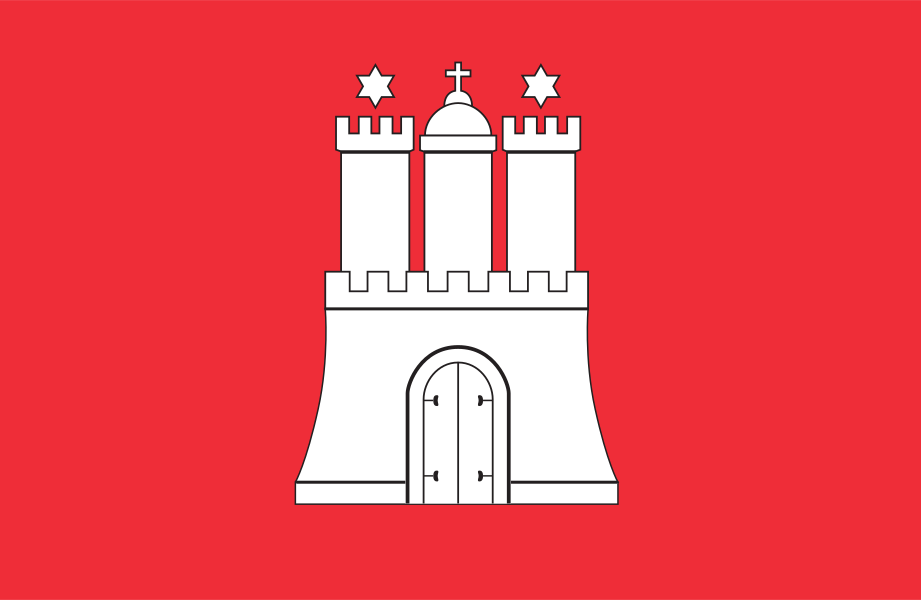
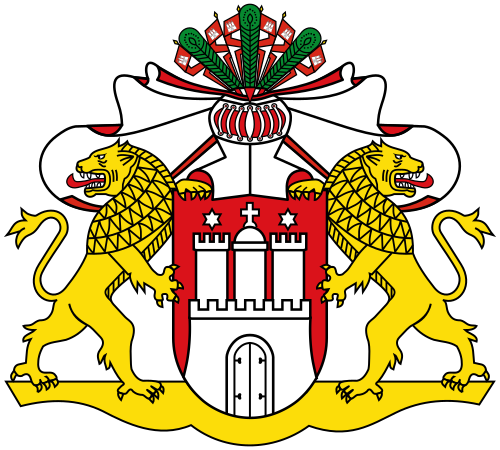
Thirteen of the 16 states are called area states (Flächenländer) and contain a mix of cities, towns, and rural regions. The other three — Berlin, Hamburg, and Bremen — are called city-states (Stadtstaaten) because each one is a single city (or, in Bremen's case, two neighboring cities) that also functions as a state.
Five of the area states — Brandenburg, Mecklenburg-Vorpommern, Saxony, Saxony-Anhalt, and Thuringia — are sometimes called the "new states" (neue Länder). They were formed when East Germany joined the Federal Republic during German reunification in 1990.
The states play a major role in German government. They make their own laws on areas like education, policing, and culture, and they send representatives to the Bundesrat (Federal Council), the upper house of the federal parliament, where they help shape national legislation.
2.1 Origins after World War II✎
Modern Germany's federal structure was created after
World War II. When the
Federal Republic was founded in West Germany in 1949, it was made up of 11 states (including
West Berlin as a special case).
East Germany, also founded in 1949, originally had 5 states but reorganized into 14 districts (
Bezirke) in 1952, doing away with the state system there.
Two early changes reshaped the West German map. In 1952, the southwestern states of Baden, Württemberg-Baden, and Württemberg-Hohenzollern merged to form
Baden-Württemberg. In 1957, the
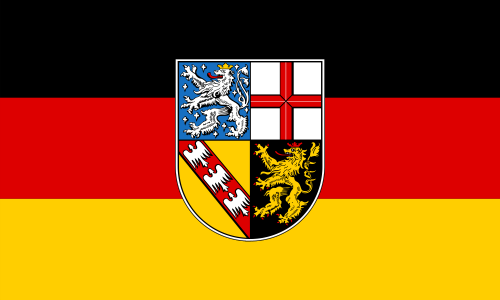
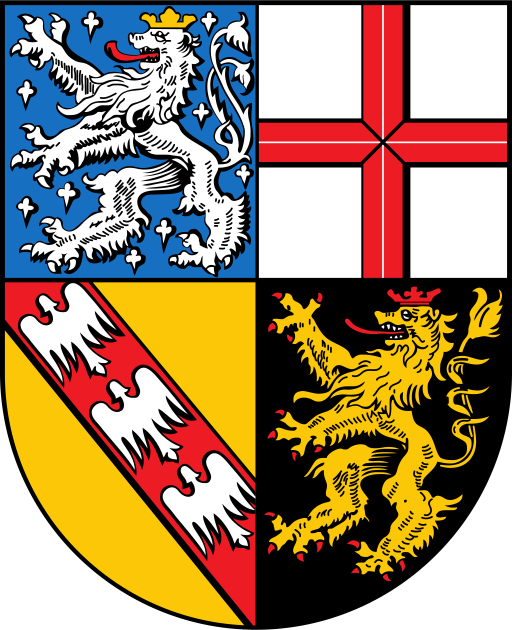
Saarland — which had been a French-administered territory after the war — joined the Federal Republic as the 10th state.
2.2 Reunification in 1990✎
When
German reunification took place on October 3, 1990, East Germany's districts were reorganized back into 5 states:
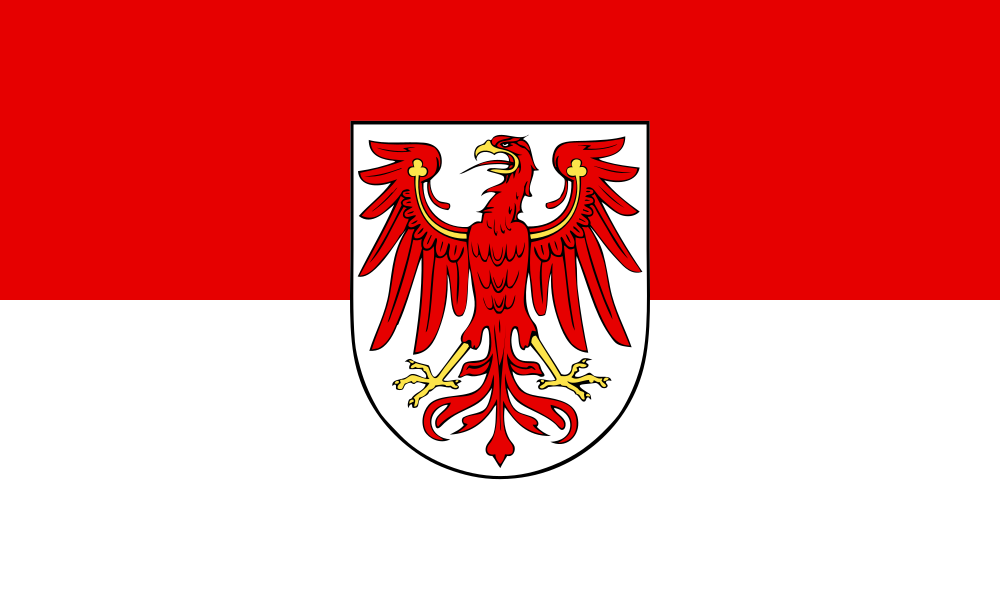
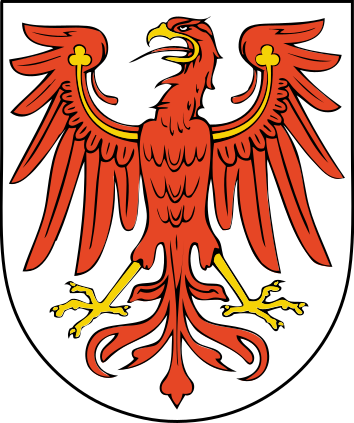
Brandenburg,
Mecklenburg-Vorpommern,
Saxony,
Saxony-Anhalt, and
Thuringia. These joined the Federal Republic alongside a now-reunified
Berlin, bringing the total to 16 states.
The structure has been stable since then. The most notable proposed change involved
Berlin and
Brandenburg, whose voters rejected combining the two states in a 1996 referendum.
The 13 area states (
Flächenländer) are the largest type and cover most of Germany's land. Each contains many cities, towns, and rural districts, and is divided internally into smaller administrative units called counties (
Landkreise) and county-free cities (
kreisfreie Städte). The largest by area is
Bavaria, which alone makes up about a fifth of Germany.
Three states are city-states (
Stadtstaaten):
Berlin,
Hamburg, and
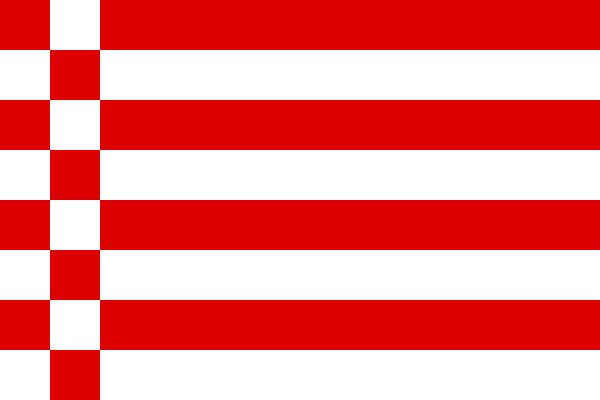
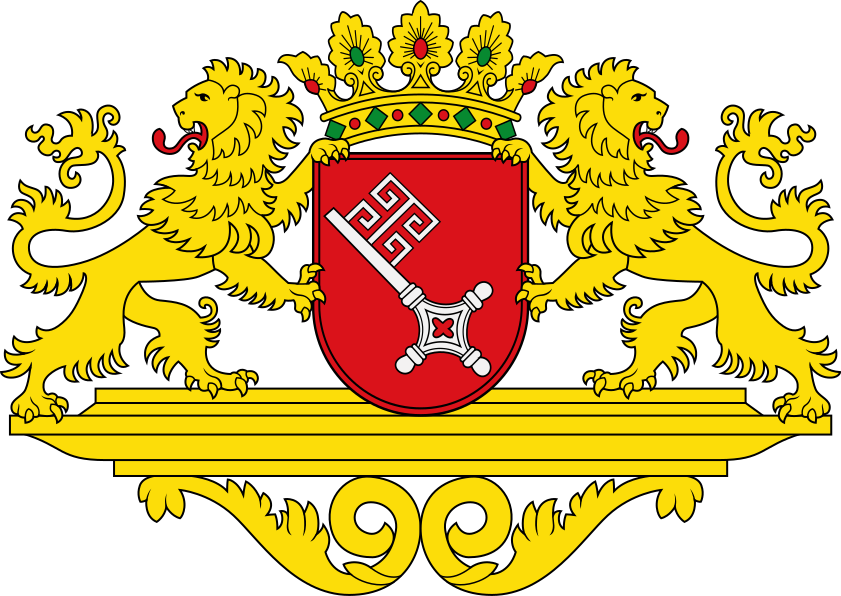
Bremen. In each case, a single city (or, for Bremen, the two cities of Bremen and
Bremerhaven) functions both as a city and as a full state. This means the city government and the state government are essentially the same body, which makes the city-states unusual within the German system.
City-states have the same rights and responsibilities as area states, including representation in the
Bundesrat. Their unique status reflects historical traditions:
Hamburg and
Bremen were free
Hanseatic cities for centuries, and
Berlin was given special status during the
Cold War.
| State |
Capital |
Type |
Population (approx.) |
Area (km²)
|
| Baden-Württemberg |
Stuttgart |
Area state |
11.3 million |
35,748
|
| Bavaria |
Munich |
Area state |
13.4 million |
70,542
|
| Berlin |
Berlin |
City-state |
3.8 million |
891
|
| Brandenburg |
Potsdam |
Area state |
2.6 million |
29,654
|
| Bremen |
Bremen |
City-state |
684,000 |
419
|
| Hamburg |
Hamburg |
City-state |
1.9 million |
755
|
| Hesse |
Wiesbaden |
Area state |
6.4 million |
21,115
|
| Lower Saxony |
Hanover |
Area state |
8.1 million |
47,710
|
| Mecklenburg-Vorpommern |
Schwerin |
Area state |
1.6 million |
23,295
|
| North Rhine-Westphalia |
Düsseldorf |
Area state |
17.9 million |
34,113
|
| Rhineland-Palatinate |
Mainz |
Area state |
4.1 million |
19,858
|
| Saarland |
Saarbrücken |
Area state |
990,000 |
2,571
|
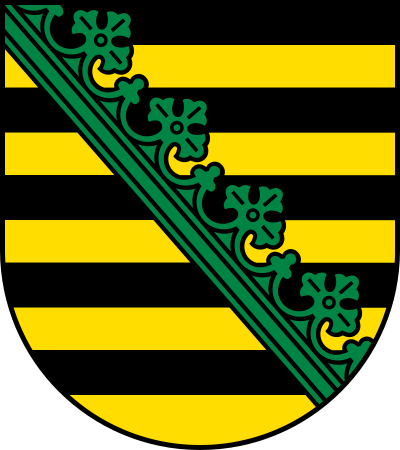
| Saxony |
Dresden |
Area state |
4.1 million |
18,450
|
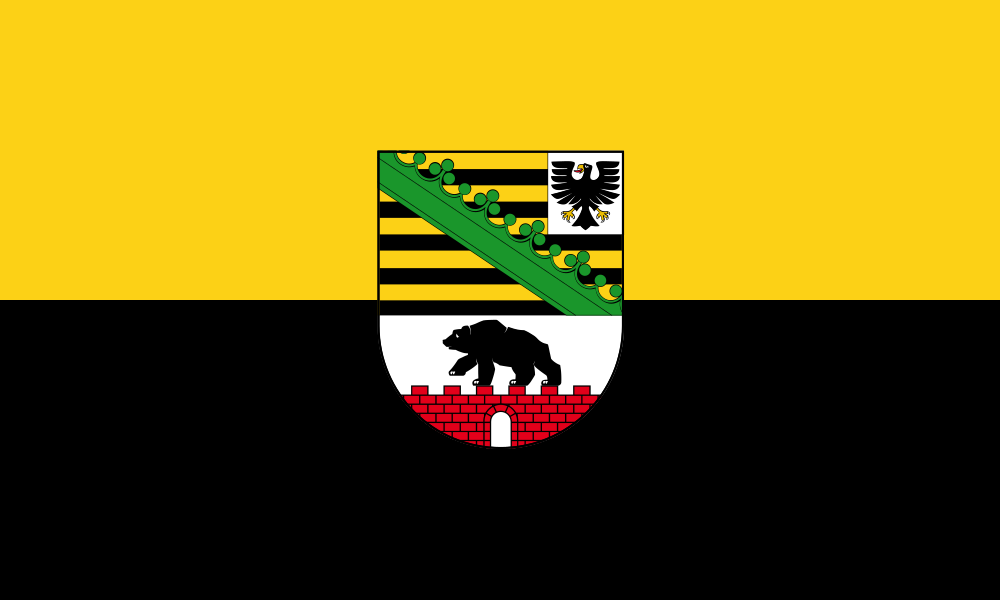
| Saxony-Anhalt |
Magdeburg |
Area state |
2.2 million |
20,452
|
| Schleswig-Holstein |
Kiel |
Area state |
2.9 million |
15,804
|
| Thuringia |
Erfurt |
Area state |
2.1 million |
16,202
|
Every state has its own constitution, its own elected parliament, and its own government headed by a
minister-president (
Ministerpräsident). In the city-states the head of government has a different historical title:
Berlin has a Governing Mayor (
Regierender Bürgermeister), while
Hamburg and
Bremen each have a First Mayor (
Erster Bürgermeister).
State parliaments are called
Landtag in most states. The city-states use older names: Berlin has the
Abgeordnetenhaus ("House of Representatives"), and both
Hamburg and
Bremen have a
Bürgerschaft ("Citizens' Assembly").
States have authority over major areas including education (school systems differ noticeably between states), police, broadcasting, and culture. They also share authority with the federal government in many other areas under the
Basic Law (
Grundgesetz).
The states are represented at the federal level through the
Bundesrat (Federal Council), the upper house of the German parliament. Each state's government appoints members directly — usually members of the state cabinet — and each state has between 3 and 6 votes depending on its population, for a total of 69 votes. Within the Bundesrat, a state's votes must be cast as a single bloc, not split between members.
The Bundesrat must approve federal laws that affect state powers or finances, which gives the states a strong voice in national policy.