The Legend of Zelda: Breath of the Wild
 i i
|
|---|
[ Show/Hide ]
|
|
The Legend of Zelda:
Breath of the Wild ゼルダの伝説 ブレス オブ ザ ワイルド
| |||||||||||
 i i
| |||||||||||
| Developer | Nintendo EPD | ||||||||||
|---|---|---|---|---|---|---|---|---|---|---|---|
| Publisher | Nintendo | ||||||||||
| Director | Hidemaro Fujibayashi | ||||||||||
| Producer | Eiji Aonuma | ||||||||||
| Platform(s) | Wii U, Nintendo Switch, Nintendo Switch 2 | ||||||||||
| Release date | March 3, 2017 Switch 2 Edition: June 5, 2025 | ||||||||||
[ More / Less ]
| |||||||||||
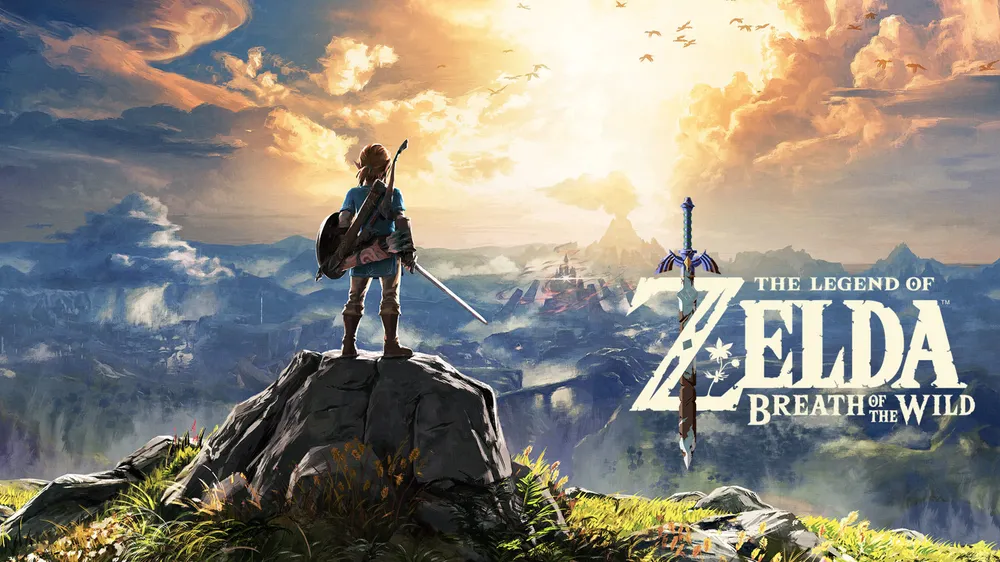
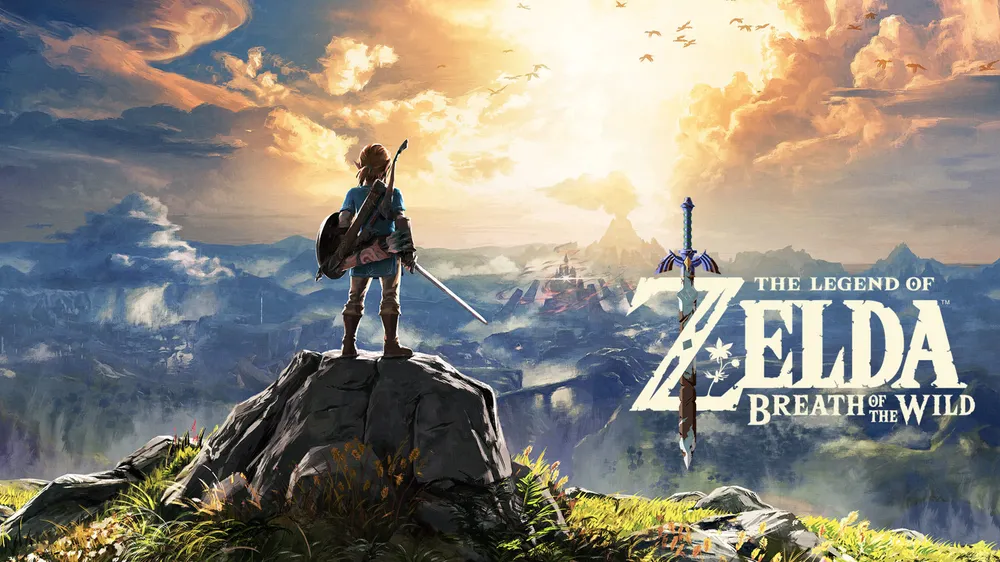
The Legend of Zelda: Breath of the Wild is a 2017 action-adventure game developed by Nintendo EPD and published by Nintendo for the Wii U and Nintendo Switch. Set at the end of the Zelda timeline, it follows Link as he awakens from a hundred-year slumber to save Princess Zelda and prevent the ancient evil Calamity Ganon from destroying the kingdom of Hyrule. The game is built around an open world that players are free to explore in virtually any order, with a physics and chemistry engine that governs how objects interact and enables emergent, experimentation-driven gameplay.
Directed by Hidemaro Fujibayashi and produced by series veteran Eiji Aonuma, Breath of the Wild was developed over five years beginning after the release of Skyward Sword (2011). The development team set out to fundamentally rethink the conventions of the Zelda series, drawing inspiration from games such as The Elder Scrolls V: Skyrim and Shadow of the Colossus. Monolith Soft, developers of the Xenoblade Chronicles series, assisted with landscape and topographical design. The game was the first mainline Zelda title to feature voice acting in cutscenes, and its soundtrack, composed by Manaka Kataoka, Yasuaki Iwata, and Hajime Wakai, marked a departure toward ambient, piano-driven music.
Released on March 3, 2017, as the final Nintendo-published Wii U game and a launch title for the Switch, Breath of the Wild received universal critical acclaim — holding a 97/100 on Metacritic for the Switch version, the highest-rated game of 2017, and one of the highest-rated games of all time. It won Game of the Year at The Game Awards 2017 and the 21st Annual D.I.C.E. Awards, among numerous other accolades. It has sold approximately 33.6 million copies worldwide as of December 2025, making it the best-selling game in the Zelda franchise.[2] An enhanced Nintendo Switch 2 edition was released on June 5, 2025.
Breath of the Wild is widely considered one of the greatest video games ever made and a landmark in open-world game design for its emphasis on player freedom, physics-based problem solving, and emergent gameplay. A spinoff, Hyrule Warriors: Age of Calamity (2020), and a direct sequel, The Legend of Zelda: Tears of the Kingdom (2023), followed.
1 Overview✎
Breath of the Wild is an open-world action-adventure game. Players control Link as he explores the vast kingdom of Hyrule, which can be traversed freely from the opening hours of the game. The world is designed to reward curiosity and experimentation — there is no enforced order for tackling objectives, and the player can proceed directly to the final boss from very early on, though doing so without preparation is extremely difficult.
A central innovation is the physics and "chemistry" engine that governs how objects and elements in the world interact. Materials have physical properties: wood burns, metal conducts electricity, and objects react to wind and gravity. During thunderstorms, for example, metal equipment attracts lightning — posing a hazard to the player, but also creating opportunities to weaponize the weather against enemies. This system means that most puzzles and combat encounters have multiple possible solutions rather than a single intended approach.
Link can run, climb nearly any surface, swim, and glide using a paraglider, though all of these actions are limited by a stamina meter. Weapons, shields, and bows degrade with use and eventually break — a controversial design choice that forces the player to continuously scavenge and adapt. The game features a cooking system in which ingredients gathered from the world can be combined into meals and elixirs that restore health, boost stamina, or grant temporary effects such as cold resistance or increased stealth.
The Sheikah Slate, a tablet-like device, serves as Link's primary tool. It grants four rune abilities: remote bombs, the power to manipulate metal objects (Magnesis), the ability to create ice pillars on water surfaces (Cryonis), and the ability to freeze objects in time (Stasis). These abilities are acquired in the game's opening area, the Great Plateau, and remain the player's core toolkit throughout.
2 Plot✎
The game takes place in a version of Hyrule set 10,000 years after an ancient civilization — the Sheikah — used powerful technology to defeat an ancient evil known as Calamity Ganon. One hundred years before the events of the game, Ganon returned. The kingdom prepared by excavating four giant mechanical creatures called Divine Beasts and activating an army of autonomous weapons called Guardians. Four Champions — Mipha of the Zora, Daruk of the Gorons, Revali of the Rito, and Urbosa of the Gerudo — were chosen to pilot the Divine Beasts, while Princess Zelda and her appointed knight, Link, would confront Ganon directly.
The plan failed. Ganon possessed the Guardians and Divine Beasts, turning them against Hyrule. The four Champions were killed. Link was mortally wounded, and Zelda used her awakened sealing power to save him, placing him in the Shrine of Resurrection to heal. She then sealed herself and Ganon inside Hyrule Castle, holding him at bay for a century.
| Link awakens with no memory in the Shrine of Resurrection and is guided by the spirit of King Rhoam, who reveals the state of the world and urges Link to defeat Ganon before he breaks free. Link travels across Hyrule, freeing the four Divine Beasts from Ganon's corruption, which also liberates the spirits of the fallen Champions. Each Champion grants Link a special ability: Mipha's Grace (auto-revival), Revali's Gale (an upward wind current), Daruk's Protection (a temporary shield), and Urbosa's Fury (a lightning strike). Along the way, Link recovers fragments of his lost memories through visits to specific locations. After reclaiming the Master Sword from Korok Forest, Link enters Hyrule Castle and confronts Calamity Ganon. With the Divine Beasts weakening Ganon, Link defeats him, and Zelda seals him away for good, restoring peace. If the player has found all thirteen memories, a post-credits scene shows Link and Zelda setting out to rebuild Hyrule together. |
3 Development✎
Development began immediately after Skyward Sword shipped in 2011. Producer Eiji Aonuma noted that players had expressed a desire for a more interconnected world to explore, and the team set a goal of rethinking fundamental Zelda conventions — particularly the expectation that dungeons must be completed in a fixed order. Nintendo experimented with nonlinear design in A Link Between Worlds (2013), and the positive response confirmed the direction for the next mainline title.[3]
Before full production, the team built a playable 2D prototype in the style of the original The Legend of Zelda (1986) to test physics-based interactions and open-ended puzzle design. The final game uses a modified version of the Havok physics engine. At the 2017 Game Developers Conference, director Fujibayashi, technical director Takuhiro Dohta, and art director Satoru Takizawa presented the prototype and discussed the game's design philosophy in a talk titled "Change and Constant — Breaking Conventions with The Legend of Zelda: Breath of the Wild."[4]
Since Nintendo had never developed an open-world game at this scale, the team looked to The Elder Scrolls V: Skyrim (2011) for reference. Shadow of the Colossus (2005) also influenced the climbing mechanics — its creator, Fumito Ueda, was a personal friend of Aonuma. The art style drew from gouache and en plein air painting traditions, and art director Takizawa cited the Japanese Jōmon period as inspiration for the ancient Sheikah technology. The landscape was modeled on locations around Kyoto, the hometown of director Fujibayashi, and Monolith Soft contributed to the topographical design.
Early in development, the team prototyped a "double hookshot" system that allowed Link to swing between surfaces, but it was cut because it gave the player too much mobility and undermined the climbing mechanic. Link was also redesigned to be more gender-neutral so players could relate to him more easily. The Wii U GamePad's button layout led to Link being made right-handed — a change from his traditional left-handedness. Ideas for flying and underground dungeons were shelved due to Wii U hardware limitations and later incorporated into the sequel, Tears of the Kingdom.
Breath of the Wild was the first mainline Zelda game to feature full voice acting in cutscenes (though Link himself remains a silent protagonist). The soundtrack took an ambient, piano-driven approach rather than the melodic orchestral style of earlier entries, a choice the sound team felt added authenticity to the game's vast, quiet landscapes.
4 Release✎
Aonuma first announced a new HD Zelda title for the Wii U during a January 2013 Nintendo Direct. In-game footage debuted at E3 2014, showing a cel-shaded open world. The game was initially planned for 2015 but was delayed twice — first in early 2015 and again in April 2016, the latter due to problems with the physics engine. At E3 2016, Nintendo showcased a playable demo and revealed the subtitle Breath of the Wild. Multiple outlets named it the best game of the show.
The game launched simultaneously on Wii U and Switch on March 3, 2017. It was the last Nintendo-published Wii U game and a launch title for the Switch. Limited "Special Edition" and "Master Edition" bundles included items such as a Sheikah Eye coin, a world map tapestry, a soundtrack CD, and (in the Master Edition) a Master Sword figurine. An "Explorer's Edition" followed in November 2017.
Two DLC packs were released in 2017 via an expansion pass. The Master Trials (June) added a harder difficulty mode (Master Mode), the Trial of the Sword challenge, and the Hero's Path map feature. The Champions' Ballad (December) added a new dungeon, additional story content about the four Champions, and the Master Cycle Zero — a rideable motorcycle for Link.
An enhanced edition was released as a launch title for the Nintendo Switch 2 on June 5, 2025, featuring improved resolution, higher framerate, HDR support, and the "Zelda Notes" feature — real-time voiced navigation by Princess Zelda accessible through the Nintendo Switch Online app.
5 Reception and legacy✎
Breath of the Wild received universal acclaim. On Metacritic, the Switch version holds a score of 97/100 and the Wii U version 96/100 — making it the highest-rated game of 2017 and one of the highest-rated games on the platform. It holds the largest number of perfect review scores of any game from any year on Metacritic. Multiple critics described it as a masterpiece.
Reviewers praised the open-world design, the physics engine, and the sense of discovery. The game won Game of the Year at The Game Awards 2017, the 21st Annual D.I.C.E. Awards, the Japan Game Awards, and The Game Developers Choice Awards, among many others.
The game's commercial performance matched its critical reception. It broke sales records for a Nintendo launch title and has sold approximately 33.6 million copies as of December 2025, making it the best-selling Zelda game of all time — surpassing Ocarina of Time, which had held the record for over two decades.
Breath of the Wild is widely credited with redefining open-world game design. Its emphasis on player freedom, physics-driven experimentation, and minimal hand-holding influenced numerous subsequent titles. The ability to climb any surface and glide across the map was seen as a fundamental rethinking of how players interact with open worlds, pushing developers across the industry to reconsider vertical exploration and sandbox interactivity. Numerous game developers have cited it as a direct influence on their own work, and it became a common benchmark against which other open-world games were measured.
A spinoff, Hyrule Warriors: Age of Calamity (2020), set during the Great Calamity backstory, was developed by Koei Tecmo's Omega Force division. A direct sequel, The Legend of Zelda: Tears of the Kingdom (2023), expanded on Breath of the Wild's world with new mechanics including the Ultrahand construction system, and sold over 20 million copies within its first year.
6 See also✎
- The Legend of Zelda series
- The Legend of Zelda: Tears of the Kingdom
- Link (The Legend of Zelda)
- Princess Zelda
- Nintendo Switch
- Hyrule Warriors: Age of Calamity
- Metacritic aggregate score for the Nintendo Switch version. [https://www.metacritic.com/game/the-legend-of-zelda-breath-of-the-wild/ metacritic.com].
- Nintendo IR Information: Top Selling Title Sales Units (as of December 31, 2025). [https://www.nintendo.co.jp/ir/en/finance/hard_soft/index.html nintendo.co.jp/ir].
- Aonuma's statements at E3 2014. Reported by Eurogamer, January 18, 2017.
- GDC 2017 presentation by Fujibayashi, Dohta, and Takizawa. Reported by Ars Technica, March 1, 2017.