Loading history…
Fedora Linux
This is r2 (the current revision), saved by jack. Full history
|
Freedom · Friends · Features · First
| |
 i i
| |
|
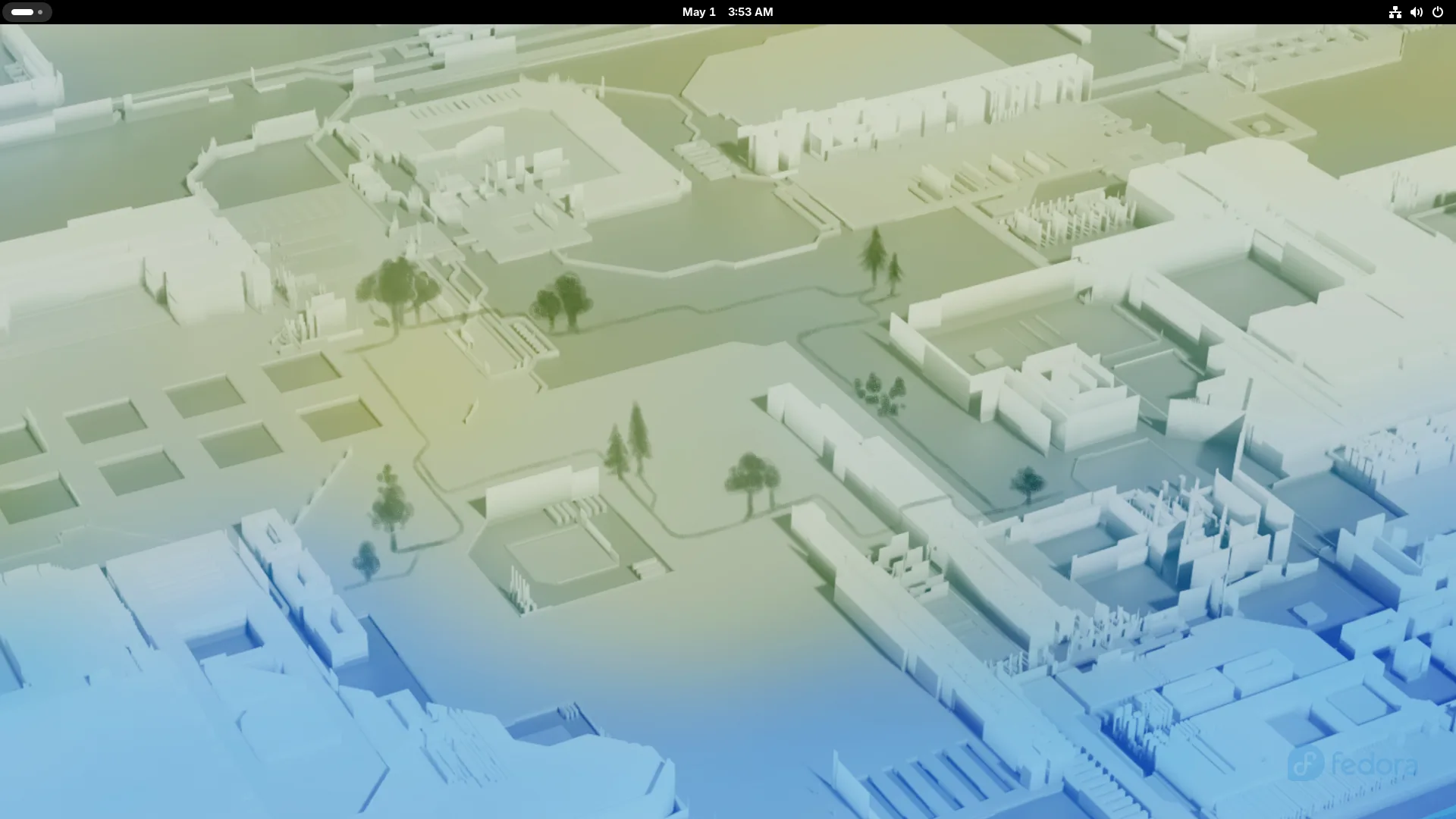
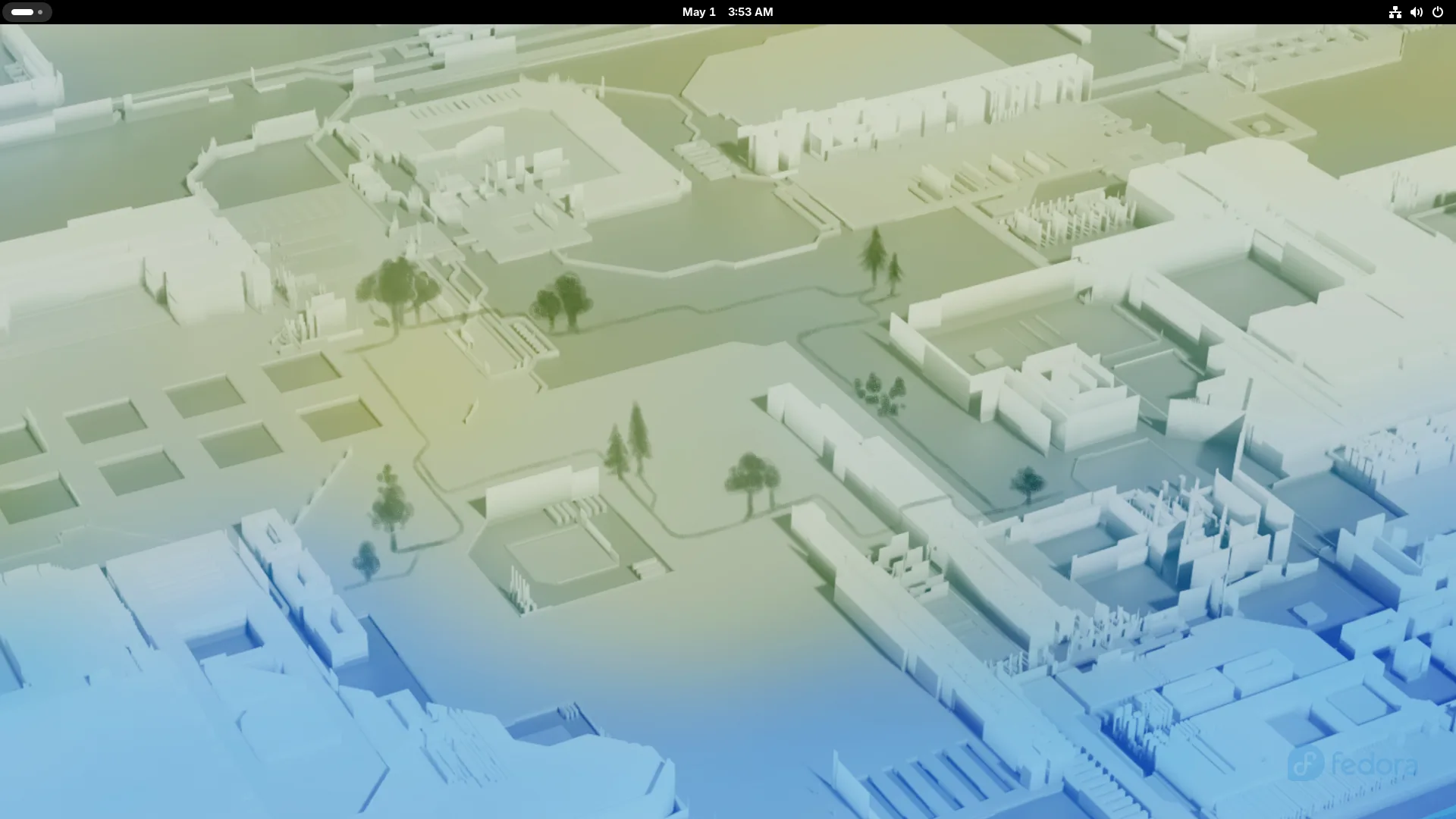
Fedora Workstation 44 on the GNOME desktop
The default session, with the activities overview closed
| |
| Developer | The Fedora Project, sponsored by Red Hat |
|---|---|
| Origin | Warren Togami's fedora.us package archive, 2002 |
| First release | 2003.11.06 (Fedora Core 1, "Yarrow") |
| Latest release | 44 (2026.04.28) |
| In development | 45, due 2026.10.20 |
| Project leader | Jef Spaleta, since June 2025 |
| Downstream | CentOS Stream and Red Hat Enterprise Linux |
| Default desktop | GNOME 50, on Wayland only |
| Kernel | Linux 6.19 |
| Package management | RPM and DNF, with Flatpak alongside |
| Editions | Workstation, KDE Plasma Desktop, Server, IoT, Cloud, CoreOS |
| Architectures | x86-64 and ARM64; ppc64le and s390x as secondary |
| Support | About 13 months per release |
| License | Free software licenses, with firmware exceptions |
| Website | fedoraproject.org |













Fedora Linux is a Linux distribution developed by a community project that Red Hat sponsors and, in practice, staffs. It takes new software as soon as it is stable enough to ship. A Fedora release therefore carries the kernel, desktop and compiler versions that other distributions adopt a year or two later. Everything in it is free software, and the project refuses patented codecs and proprietary drivers rather than negotiate for them.
A new version arrives every six months, in April and October, and each one is supported for about thirteen months. There is no long-term release, and there never has been, so a machine that stays on Fedora is upgraded at least once a year. The current release is version 44, published on 2026.04.28, and version 45 is due on 2026.10.20.
Its importance comes from what sits downstream. Red Hat builds Red Hat Enterprise Linux, the operating system that most large companies pay for, from a snapshot of Fedora taken every three years or so. That makes Fedora the place where the company's engineers and the wider community test what enterprise Linux will look like next, and it is also the system Linus Torvalds runs on his own machines.
1 History✎
1.1 Red Hat Linux✎
Red Hat sold a boxed Linux system from 1995, and by 2002 its Red Hat Linux was the version most people outside Debian used. That year Warren Togami, an undergraduate at the University of Hawaii, started fedora.us as a volunteer archive of extra packages for it. Red Hat itself shipped a deliberately narrow selection. The name came from the hat in the company's logo.
In September 2003 Red Hat announced that Red Hat Linux 9 would be the last of its line. The company wanted a product it could sell to businesses with long support periods, and a free system that moved quickly could not be that product. It merged its own distribution with Togami's project and kept the consumer system free under the new name, and put the enterprise work into a separate, paid line. Fedora Core 1, "Yarrow", was published on 2003.11.06.
1.2 Core and Extras✎
For its first three years the system came in two parts, a Core that Red Hat's employees maintained and an Extras archive that the community maintained. The division reflected who was responsible for what rather than what a user needed, and it meant that community packagers could not touch the packages that mattered most. Fedora 7, published on 2007.05.31, merged the two archives, dropped "Core" from the name and opened the whole system to community maintainers.
The project's name was contested once. Cornell University and the University of Virginia had built a digital repository system called Fedora, and they objected when Red Hat applied to register the trademark. The parties settled in 2009 on an agreement that lets each use the name in its own field, which is why a library's Fedora and a computer's Fedora still coexist.
1.3 Fedora.next✎
The project spent 2013 and 2014 deciding what it was for. The answer, called Fedora.next, was to stop shipping one general-purpose image and instead publish distinct editions aimed at distinct users, each with its own working group. Fedora 21, published on 2014.12.09, was the first built that way, with Workstation, Server and Cloud editions. The same year the elected Fedora Board was replaced by the Fedora Council, and Matthew Miller began an eleven-year term as project leader.
Fedora 25, published on 2016.11.22, was the first major distribution to run its desktop on Wayland by default, five years before the rest of the field. Silverblue followed in 2018 as a desktop whose base system is replaced whole rather than updated in place, and CoreOS replaced Atomic Host as the container-hosting edition in 2020. In 2021 the project adopted a new logo and began writing "Fedora Linux" for the operating system, reserving the plain word for the project itself.
1.4 Recent releases✎
Version 41, published on 2024.10.29, replaced the package manager with DNF 5, a rewrite in C++ that needs no Python, and removed the X.Org session from the Workstation edition. Version 42, published on 2025.04.15, promoted the KDE Plasma spin to a full edition alongside Workstation. It also replaced the installer's interface with one built on web technology and added a spin for the COSMIC desktop. It was Miller's last release; Jef Spaleta, an early contributor who had spent the intervening years on aurora research in Alaska and Antarctica, succeeded him in June 2025.
Version 43 followed on 2025.10.28 with GNOME 49, which had dropped its X11 session upstream, RPM 6.0 and Python 3.14. Version 44, published on 2026.04.28, ships GNOME 50, KDE Plasma 6.6 and the Linux 6.19 kernel, and it is the first release with no X11 session anywhere in the default editions. A kernel module for the synchronization primitives that Windows games expect is now loaded automatically when Wine or Steam is installed.
A proposal in May 2026 for an edition built around AI development tools was approved by the council unanimously. It was withdrawn within two days, after two members reversed their votes amid community objection. Version 45 is in beta and due on 2026.10.20 with GNOME 51, Python 3.15 and Podman 6. It will also require package builds to be reproducible, restrict debugging of other users' processes by default and stop the package manager from silently swapping a package for one from a different vendor.
| Release | Date | Notable changes |
|---|---|---|
| Fedora Core 1 "Yarrow" | 2003.11.06 | The first release, from the merger with Red Hat Linux |
| 7 "Moonshine" | 2007.05.31 | Core and Extras merged; the word Core dropped from the name |
| 21 | 2014.12.09 | Workstation, Server and Cloud editions |
| 25 | 2016.11.22 | Wayland by default, the first major distribution to do so |
| 41 | 2024.10.29 | DNF 5; Workstation loses its X11 session |
| 42 | 2025.04.15 | KDE Plasma Desktop becomes an edition; web-based installer |
| 43 | 2025.10.28 | GNOME 49; RPM 6.0; Python 3.14 |
| 44 | 2026.04.28 | GNOME 50; Plasma 6.6; Linux 6.19; no X11 session anywhere |
| 45 | due 2026.10.20 | GNOME 51; reproducible package builds required |
2 Editions✎
Workstation is the desktop most people mean by the name, and it ships GNOME with a small set of applications and the developer tools that Red Hat's own engineers use. KDE Plasma Desktop has stood beside it since version 42 as an equal edition rather than a variant. That ended a decade of the Plasma community arguing that its work was treated as second-class. Server has no desktop and is installed from a text or web interface, and IoT is a cut-down system for devices that update themselves and roll back if an update fails.
Cloud publishes images for the major providers, and CoreOS is a minimal system that exists to run containers and nothing else. It updates automatically by replacing its whole base image and reboots into the result. Container Linux pioneered that design before Red Hat acquired the project in 2018. Each edition is the responsibility of a working group that decides what goes into it.
3 Spins, Labs and Atomic Desktops✎
A spin is the same system with a different desktop, built by a community team and released on the same day as the editions. Xfce, LXQt, MATE, Cinnamon, Budgie, Sway, i3 and COSMIC each have one, and there is a spin for the Plasma Mobile interface on phones. Labs are spins arranged around a task instead of a desktop, and they bundle software for games, security testing, design, robotics, astronomy and scientific computing.
The Atomic Desktops apply the CoreOS idea to a workstation. Silverblue carries GNOME and Kinoite carries KDE Plasma, with Sway, Budgie and COSMIC variants alongside. The base system on each is a read-only image, and an update replaces it as a whole. A bad update is undone by booting the previous image. Applications are installed as Flatpaks or inside containers rather than into the base. The same images are now also published as containers, so a workstation can be built from a Containerfile and rebased onto the result.
4 The desktop✎
Workstation ships GNOME with almost nothing changed, which is the reverse of what Ubuntu does with the same desktop. There is no dock and no desktop icons, the top bar is GNOME's own, and the theme is the one GNOME designs. That restraint is deliberate. Many of the people who build GNOME are Red Hat employees who use Fedora to develop it, and the edition is meant to show the desktop as its designers intended.
The desktop runs on Wayland only. The X.Org session went from Workstation in version 41, from GNOME itself in version 43 and from every default edition in version 44. Software written for X11 runs through a compatibility layer instead. Installation uses Anaconda, the installer Red Hat Enterprise Linux also uses. Since version 42 it presents a browser-based interface that asks for a language, a disk and little else. User accounts and the remaining choices are left to a first-boot setup.
5 Software and packaging✎
Packages are in the RPM format, which Red Hat created in 1997 and which SUSE, Mageia and their relatives also use. The tool that fetches and installs them is DNF, rewritten as DNF 5 in version 41 and now driving GNOME Software as well as the command line. Each release freezes its major versions but continues to take new minor releases of most packages, so a Fedora system changes more during its year than a Debian one does.
What the archive refuses matters as much as what it holds. Software under a patent, including the codecs that play most video, is left out, and so are proprietary drivers. That keeps the project within the law in the United States, where Red Hat is based. RPM Fusion, an independent archive with no formal connection to the project, fills the gap, and the installer offers to enable it. Flatpak is installed by default, and since version 38 the Flathub catalog can be enabled during setup, which puts most commercial desktop applications one click away.
Copr is the project's build service, where any contributor can publish packages outside the main archive, and it is where software reaches Fedora users before it reaches the archive. SELinux, the mandatory access control system that the National Security Agency wrote and Red Hat maintains, is enforced by default on every edition. Fedora and its downstreams are nearly alone in doing so.
6 Release model and support✎
Releases are scheduled for the last Tuesday of April and October. The date slips by a week or two when a blocking bug is found, since the project does not ship around a known blocker. Each version is supported until a month after the release two versions later, which works out to about thirteen months. Upgrading in place between versions is supported and is how most installations move forward, and skipping one version is also supported.
Development happens in Rawhide, a rolling branch that never releases and from which each version is branched about two months before its beta. Changes are proposed in writing, reviewed by the engineering committee and tracked against the schedule, and a release is judged against a written list of criteria at go/no-go meetings. That process is what lets the project take new software early without shipping it broken.
7 Governance✎
The Fedora Council is the project's top body. It has a mix of elected seats, appointed seats and representatives of the two committees below it, and the project leader chairs it. The Fedora Engineering Steering Committee, elected by contributors, decides technical questions and approves the changes each release carries. The Mindshare Committee handles outreach, events and the ambassador program.
The project leader is a Red Hat employee whom the company appoints, though the council must confirm the choice. Paul Frields, Jared Smith and Robyn Bergeron held the post before Miller, whose eleven years were the longest, and Spaleta has held it since June 2025. Red Hat pays for the infrastructure, employs most of the engineers who maintain the base system and holds the trademark, so the project is independent in its decisions but not in its means.
8 Red Hat and downstream✎
Red Hat, which IBM acquired in 2019 for 34 billion dollars, is the largest company in the Linux business and Fedora is its upstream. Every few years the company branches CentOS Stream from a Fedora release and spends about a year stabilizing it. A major version of Red Hat Enterprise Linux is then published from the result. Version 8 came from Fedora 28, version 9 from Fedora 34 and version 10 from Fedora 40. Minor releases of the enterprise system take individual packages from later Fedora versions.
That arrangement is the reason for most of what makes Fedora what it is. The short support period exists because long support is the enterprise product, and the strict free-software policy exists because Red Hat's legal exposure is the project's too. Since 2020 Fedora Workstation has shipped preinstalled on selected Lenovo ThinkPad models, and Framework supports it officially on its laptops.
9 See also✎
Content available under CC BY-SA 4.0